
High-Temperature Sensors for New Zealand Dairy & Process Lines
Pre-pressurized polymer gel, solid electrolyte reference barriers, and lead-free high-temperature glass formulations engineered for aggressive CIP chemicals and continuous steam exposure.
-
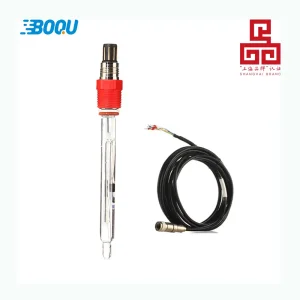 Wholesale High Temperature (0-130℃) pH Sensor Supplier, Factories
New Zealand Grade (0-130℃) High Temperature pH Sensor
-
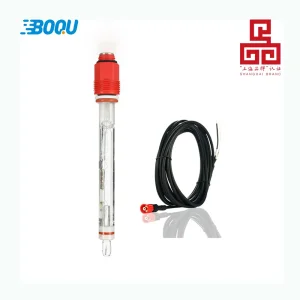 Wholesale High-temperature S8 Connector pH Sensor Manufacturers, Factory
Biotech S8 High-Temp pH Sensor for NZ Fermentation Tanks
-
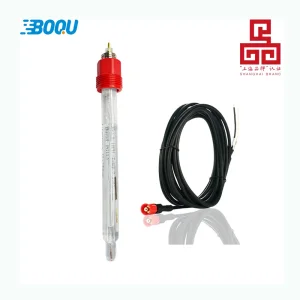 China High-temperature pH Sensor Used Pharmaceutical Fermentation Wholesaler, Supplier
Sanitary Fermentation pH Sensor for NZ Biopharma
-
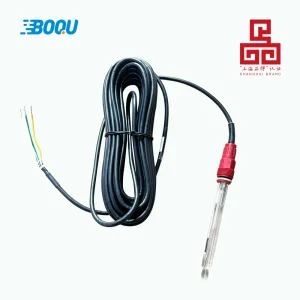 China High Temperature (0-130℃) pH Sensor With Temperature Wholesaler, Suppliers
Integrated ATC (0-130℃) pH Sensor for Geothermal Monitoring
New Zealand Industrial Landscape: Demands for High-Temperature Electrochemical Sensing
How New Zealand’s primary processing sectors, renewable geothermal infrastructure, and stringent environmental frameworks drive specialized demand for high-temperature pH and ORP instrumentation.
Dairy & Powder Processing (Fonterra, Open Country, Synlait)
New Zealand exports over 95% of its dairy production, making plants across Waikato, Taranaki, and Canterbury global hubs for milk powder, whey protein isolate (WPI), and infant nutritional formulations. Clean-In-Place (CIP) systems run at 80°C to 95°C utilizing aggressive 1.5–2.0% sodium hydroxide (NaOH) caustic washes followed by 1.0% nitric acid (HNO₃) rinses. Standard analytical sensors experience rapid glass dissolution, reference poisoning, and junction plugging under these high-thermal cyclical stresses. Our high-temperature sensors employ alkali-resistant silicate formulations that withstand repeated CIP cleaning cycles without losing slope sensitivity.
Geothermal Energy Generation (Taupō Volcanic Zone & Wairakei)
New Zealand generates more than 17% of its total electricity from geothermal resources located across the Taupō Volcanic Zone, Kawerau, and Ngāwhā. Geothermal brines and binary re-injection loops reach pressures exceeding 20 bar and temperatures above 110°C to 180°C, laden with dissolved silica, hydrogen sulfide (H₂S), and heavy metal ions. Standard Ag/AgCl reference electrodes fail almost immediately as sulfide ions penetrate porous junctions and precipitate silver sulfide (Ag₂S), completely blocking electrochemical continuity. Our specialized high-temperature ORP and pH sensors utilize pressurized solid polymer electrolytes and double-salt bridge architectures to stop sulfide poisoning and deliver reliable redox monitoring.
RMA Compliance & Taumata Arowai Environmental Standards
The Resource Management Act (RMA) along with the National Policy Statement for Freshwater Management (NPS-FM) and the water services regulator Taumata Arowai enforce rigorous standards on industrial discharge water. Meat processing plants, pulp & paper mills (such as in the Bay of Plenty), and municipal trade waste processing stations are mandated to maintain continuous, verifiable pH and ORP neutralisation records. In hot discharge streams, measurement errors caused by drift lead to non-compliance fines, trade waste surcharges, and reputational risk. Installing industrial-grade, temperature-compensated analytical probes guarantees continuous accuracy.
Overcoming Electrochemical Failure Modes in High-Thermal Applications
Why ordinary glass pH/ORP electrodes drift, foul, and crack at elevated temperatures—and how BOQU advanced materials engineering solves each physical challenge.
The Physics of High-Temperature Glass Degradation
Standard pH glass membranes are prone to "alkaline error" (sodium ion interference) and accelerated glass dissolution at temperatures exceeding 60°C. For every 10°C rise in process media temperature, the chemical rate of glass leaching doubles (following Arrhenius kinetics). In caustic CIP solutions at 85°C, an ordinary electrode’s hydrated gel layer dissolves within weeks, resulting in sluggish response times, depressed slope values (<90%), and inaccurate alkaline readings.
Our Engineering Solution: BOQU high-temperature sensors employ a proprietary lithium-bearing glass matrix formulated with rare earth oxides. This formulation exhibits an extremely dense silica network that resists alkali attack up to pH 14 and operating temperatures up to 130°C continuously, maintaining theoretical Nernstian slope integrity across extended operational runs.
Reference Junction Depletion & Sulfide Poisoning
The majority of pH sensor failures in geothermal, chemical pulp, and wastewater plants are not glass failures—they are reference electrode failures. In liquid-electrolyte or standard gel probes, high process temperatures cause thermal expansion that forces electrolyte out through the porous ceramic junction. During cooling cycles, process fluid is sucked backwards into the reference chamber ("breathing effect"). In geothermal brines or sulfurous processes, trace H₂S reacts instantly with Ag⁺ ions:
2 Ag⁺ + S²⁻ → Ag₂S↓ (Insoluble Black Precipitate)
Our Engineering Solution: We utilize a high-density, polymerized solid gel electrolyte saturated with KCl, pre-pressurized to 0.6 MPa, coupled with an open annular or PTFE ring junction. This design maintains outward positive pressure, eliminating back-diffusion and preventing reference clogging entirely.
New Zealand Wholesaler Pricelist & Sensor Selection Guide
Indicative wholesale bulk pricing (FOB Shanghai or CIF Auckland/Tauranga/Lyttelton) for process engineers, instrumentation contractors, and procurement managers.
| Model Series | Temp. Range | Electrolyte / Junction | Connector & Thread | Key NZ Target Industry | Indicative Price (USD) |
|---|---|---|---|---|---|
| pH5806 Standard High-Temp | 0 – 130°C | Polymer Solid Gel / Porous PTFE | S8 Connector / PG13.5 | Dairy Processing, Brewing, CIP Neutralization | $45.00 – $68.00 |
| pH5806-ATC Integrated | -10 – 130°C | Double Salt Bridge / Polymer Gel | VP6 Connector / Pt1000 ATC | Industrial Fermentation, Biopharma (Auckland) | $72.00 – $98.00 |
| ORP-5806 Redox Sensor | 0 – 130°C | Solid Polymer / Platinum Ring Electrode | S8 or Fixed High-Temp Coaxial Cable | Geothermal Reinjection, Bleaching, Disinfection | $52.00 – $75.00 |
| IOT-485 Digital Smart Probe | -10 – 110°C | Integrated Preamp + Solid Electrolyte | RS485 Modbus RTU / M12 4-Pin | Direct SCADA/PLC Integration, Dairy Effluent | $115.00 – $145.00 |
| SJG-2083CS Acid/Alkali Toroidal | 0 – 150°C | PFA/PVDF Inductive Toroidal Coil | Flange or Tri-Clamp Sanitary Port | Continuous CIP Caustic/Acid Concentration Control | $240.00 – $320.00 |
*Pricing reflects wholesale MOQs (10 to 500 units). Final landed costs depend on delivery terms, custom lead lengths (5m/10m/20m), sensor head metallurgy (316L, Hastelloy C-276, Titanium), and New Zealand customs GST/import duties. Request an official formal CIF quotation here.
Direct-from-Factory Efficiency: Why New Zealand Integrators Source with BOQU
Eliminate multi-tiered distributor markups and secure factory-level R&D customisation, rapid production schedules, and rigorous traceable quality assurance.
Vertical Supply Chain Integration
Unlike European and American legacy brands that outsource sensor subcomponents, BOQU operates two dedicated facilities in Shanghai (Kangqiao and Lingang) spanning 4,632 m². From specialized glass blowing and lithium glass matrix melting to PCB surface-mount assembly, cable potting, and automated batch calibration, every step occurs in-house. This gives New Zealand procurement specialists lead times of 5 to 7 days for batch orders, avoiding the typical 8 to 16-week backorders seen from local tier-two suppliers.
China’s 1st Dedicated High-Temp Sensor Lab
Every sensor destined for high-temperature and pressurized duty is validated in our specialized high-temperature water quality sensor laboratory. Sensors undergo 48-hour accelerated aging protocols, pressure cycling up to 1.0 MPa, and thermal shock testing between 20°C and 130°C. Individual calibration certificates (NIST traceable) verify slope integrity, zero-point potential (Eo), and response symmetry before dispatch, ensuring plug-and-play field readiness across New Zealand industrial plants.
Tailored OEM/ODM & Direct Wholesaler Margins
For system integrators, panel builders, and specialized instrumentation distributors in Auckland, Christchurch, and Wellington, we offer full private-labeling options. Modify sensor insertion lengths (120mm, 225mm, 325mm, 425mm), select custom process connections (PG13.5, 3/4" NPT, sanitary Tri-Clamp, or retractable ball-valve assemblies), and customize temperature compensation elements (Pt100, Pt1000, NTC 10K). By sourcing factory-direct, New Zealand distributors capture gross profit margins between 45% and 65%.
Global Technological Trends Shaping High-Temperature Water Quality Sensing
How the convergence of Industrial IoT, digital Modbus telemetry, and predictive edge diagnostics is revolutionizing process analytical technology (PAT).
Shift from Analog mV to Native RS485 Modbus RTU
Traditional pH/ORP electrodes transmit high-impedance millivolt signals (typically 10¹² ohms) that are susceptible to electromagnetic interference (EMI) from high-voltage variable frequency drives (VFDs), agitator motors, and industrial pumps common in modern dairy plants. The industry is moving rapidly toward smart digital sensors with onboard microprocessors. These sensors perform analog-to-digital conversion directly inside the sensor head, transmitting robust RS485 Modbus RTU signals over standard unshielded twisted pair cables up to 500 meters without signal degradation.
Edge Diagnostics & Predictive Maintenance
Modern process plants can no longer tolerate unexpected mid-batch sensor failures in sterile bioreactors or steam loops. Next-generation sensors incorporate real-time glass impedance and reference junction impedance monitoring. By tracking changes in membrane resistance (R_glass) and junction resistance (R_junction) as temperatures cycle, internal algorithms predict remaining sensor life, alert maintenance teams before junction clogging causes drift, and eliminate unplanned process halts.
Eco-Friendly Solid-State Electrolytes
Legacy process electrodes frequently utilized reference electrolytes containing silver complexes and chemical stabilizers that presented trace contamination risks in food, dairy, and beverage processing. The global transition toward polymer gel matrices with biocompatible food-grade salt bridges ensures that even in the unlikely event of physical glass rupture under extreme thermal shock, zero hazardous chemical residues leach into sanitary product streams.
Frequently Asked Questions: Sourcing High-Temp Sensors for New Zealand
Expert answers addressing compatibility, sterilization cycles, freight logistics, and calibration procedures.
How many SIP/CIP steam sterilization cycles can the pH5806 withstand?
In standard dairy and biopharmaceutical applications with steam temperatures at 121°C to 130°C for 30 to 45 minutes per cycle, our pH5806 sensor typically delivers 30 to 50+ steam sterilization cycles while maintaining a slope greater than 92%. In continuous non-cycling operations at 80°C to 90°C (such as hot wort or geothermal brine), sensor lifespan typically spans 8 to 18 months depending on chemical aggressiveness.
Are BOQU sensors compatible with existing Rosemount, Mettler-Toledo, or Endress+Hauser transmitters?
Yes. Our analog high-temperature sensors use standard coaxial S8 or VP connectors and industry-standard PG13.5 process threads. They output standard millivolt signals (-59.16 mV/pH unit at 25°C) and can be ordered with integrated Pt100, Pt1000, or NTC30K temperature elements, allowing direct drop-in replacement on existing transmitter panels without rewiring or changing mounting brackets.
What is the standard shipping lead time to New Zealand ports?
For urgent batches (10–100 units), air freight via DHL, FedEx, or SF Express from Shanghai to Auckland International Airport (AKL) or Christchurch (CHC) takes just 3 to 5 business days. For consolidated container sea freight to the Ports of Auckland, Tauranga, or Lyttelton, transit time ranges between 14 and 20 days.
How should high-temperature pH electrodes be stored and calibrated?
Electrodes must be stored with their protective hydration cap filled with 3.0M KCl solution to keep the glass gel layer and porous reference hydrated. Never allow the tip to dry out. Calibration should be performed using standard NIST or DIN buffers (pH 4.01, 7.00, 9.21/10.01). While our probes feature Automatic Temperature Compensation (ATC), two-point calibration is best conducted at or near actual operating temperatures for maximum accuracy in high-heat processes.
Complete High-Temperature Sensor Portfolio for New Zealand Distribution
Explore our complete manufacturing series available for direct bulk procurement, private labeling, and custom OEM manufacturing.
-
China High Temperature (0-130℃) pH Sensor With Temperature Wholesaler, Suppliers
Waikato Process-Series High-Temp pH Sensor
-
China High-temperature pH Sensor Used Pharmaceutical Fermentation Wholesaler, Supplier
Biotech Fermentation pH Sensor - Auckland Standard
-
Wholesale High-temperature S8 Connector pH Sensor Manufacturers, Factory
High-Temp S8 Connector Electrode for Geothermal Lines
-
Wholesale High Temperature (0-130℃) pH Sensor Supplier, Factories
Canterbury Industrial Brewery & Dairy pH Probe
-
China High Temperature (0-130℃) pH Sensor With Temperature Wholesaler, Suppliers
Bay of Plenty Pulp & Paper Heavy-Duty pH Sensor
-
China High-temperature pH Sensor Used Pharmaceutical Fermentation Wholesaler, Supplier
Sanitary Bioreactor Probe for NZ Vaccines & Enzymes
-
Wholesale High-temperature S8 Connector pH Sensor Manufacturers, Factory
Thermal Wastewater Neutralization pH Sensor
-
Wholesale High Temperature (0-130℃) pH Sensor Supplier, Factories
Geothermal Binary Cycle ORP/pH Master Probe
Accelerate Your Process Instrumentation Margins in New Zealand
Partner directly with China's leading electrochemical water quality manufacturer. Get custom OEM configurations, factory-direct bulk wholesale pricelists, and engineering validation samples shipped to New Zealand within 5 business days.