
Precision pH Sensors for Industrial & High-Temperature Service
Direct supply stream from our Shanghai cleanroom manufacturing hubs, calibrated to international electromotive series standards.








The Global Commercial Reality of Industrial Water pH Sensing
Electrochemical sensing operates at the core of global water sustainability, compliance, and advanced manufacturing efficiency.
Supply Chain Realignment
Global procurement has shifted from brand premiums to verified OEM/ODM manufacturing capability. Original equipment manufacturers and EPCs demand direct tier-1 source visibility, certified ISO cleanroom production lines, and traceable calibration certificates to circumvent international distributor markups.
Regulatory Stringency
Enforcement bodies—such as the US EPA, EU Industrial Emissions Directive, and APAC environmental agencies—have reduced permissible outfall variability tolerances. Continuous, non-drifting pH measurement is legally mandatory for discharge permits, turning analytical hardware into a vital compliance safeguard.
Industrial Digitization
Conventional 0-100mV analog signals are susceptible to electromagnetic interference over long cable runs. The commercial sector is aggressively retiring legacy analog lines in favor of digital micro-controller integrated sensors with native Modbus RS485 and direct cloud-uplink telemetries.
Audited Production Metrics Backing Global Supply
Two specialized facilities in Kangqiao and Lingang, Shanghai, operating with traceable cleanroom workflows.
Engineered Electrochemical Solutions for Specialized Demands
Process analytical formulations custom-tuned to medium velocity, fouling chemistry, and thermal stress.
Sterile Biopharma Fermentation
Cell growth in recombinant protein production hinges entirely on a steady extracellular pH. Our high-temperature glass formulations endure multiple 130℃ Steam-In-Place (SIP) cycles without hydration layer collapse, preventing batch loss and drift across hundred-hour fermentation cycles.
Thermal Power SWAS Systems
In high-pressure supercritical boilers, pure water exhibits exceptionally low ionic conductivity (<0.055 µS/cm). Boqu's specialized flowing electrolyte pH cells eliminate liquid junction potential errors and flow-rate sensitivity, safeguarding superheaters against acid corrosion and caustic gouging.
Severe Chemical & Effluent Neutralization
Industrial wastewater containing sulfides, heavy metal slurries, and organic solvents rapidly destroys standard porous junctions. Our solid polymer electrolyte junctions with double-salt bridge structures block reference poisoning and eliminate diaphragm encrustation.
Electrochemical Roadmap: Solid-State, Optical & AI Analytics
Navigating the transition from classic Nernstian glass envelopes to solid-state matrix transducers.
Digital Smart Micro-Transducers
Integrated analog-to-digital microprocessors embedded inside the sensor head. Sensor stores internal calibration constants, slope health, run-time hours, and temperature gradients directly within on-board non-volatile memory, supporting pre-calibration in clean laboratories prior to field deployment.
ISFET & Solid-State Substrates
Ion-Sensitive Field Effect Transistor (ISFET) arrays engineered with non-glass silicon materials. Capable of surviving physical shock, slurry abrasion, and regulatory ban-on-glass parameters in food, beverage, and sterile sanitary bioprocessing lines.
Predictive AI Sensor Diagnostics
Edge-computing machine learning models running dynamic impedance spectroscopy. Analyzers calculate glass membrane resistance and reference junction impedance in real time, projecting time-to-failure and cleaning alerts weeks before measurement drift occurs.
Integrated Online Analytical Sensors & Multi-Parameter Transmitters
Factory-calibrated instrumentation designed to communicate directly with automation architectures.








Tier-1 Manufacturing Cleanrooms & High-Temperature Lab
Complete traceability across electrode glass blowing, micro-junction sintering, and PCB potting.
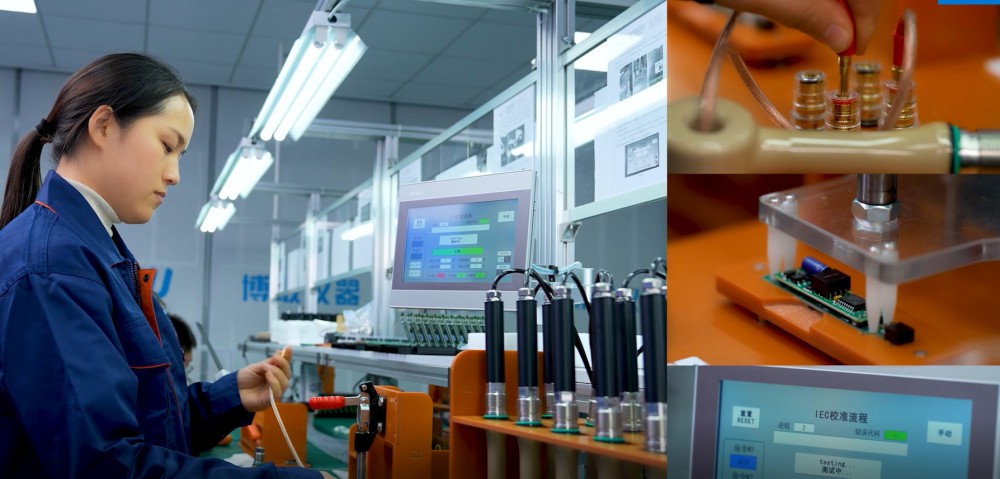
Lingang Analyzer SMT & Integration
Automated surface-mount technology assembly, circuit thermal chamber testing, and final chassis casing sealing.
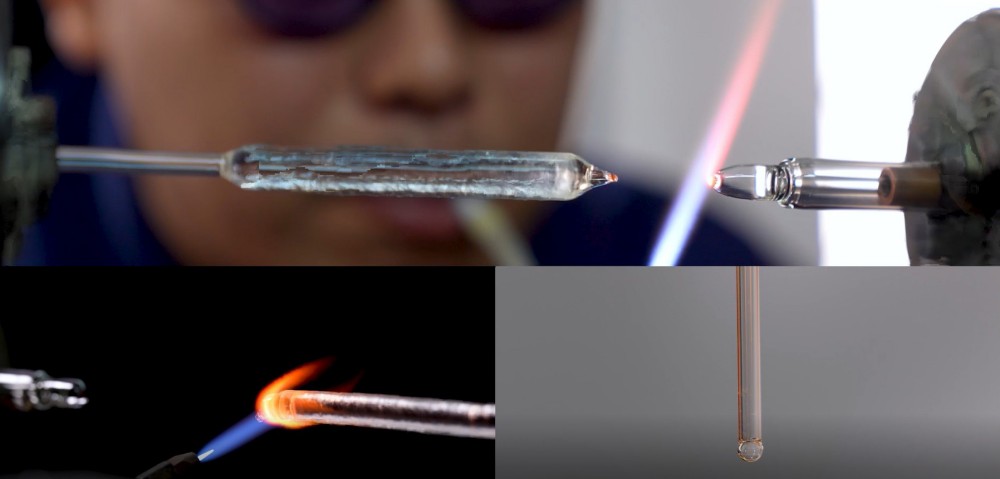
Electrochemical Glass Blowing Cleanroom
Specialized membrane glass fabrication, reference half-cell assembly, and automated polymer pressurized gel loading.
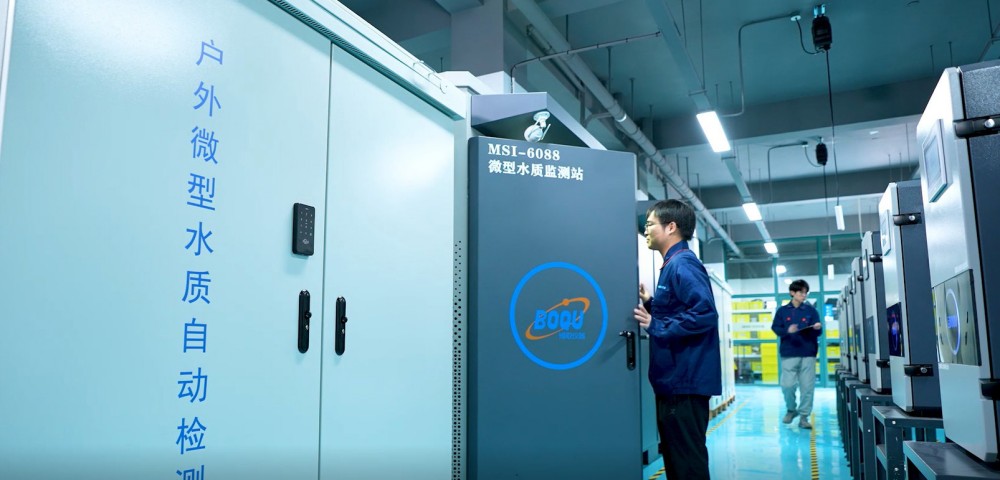
48-Hour Burn-In & Precision Calibration
Thermal bath cycling up to 130℃, dynamic slope and offset validation across multi-point certified buffers before export packing.
Frequently Asked Engineering & Sourcing Questions
Authoritative technical clarification for procurement officers, system integrators, and plant engineers.
Is Shanghai Boqu Instrument a factory manufacturer or a trading agent?
What engineering provisions permit your pH sensors to withstand continuous 130℃ SIP cycles?
What communication protocols are supported for SCADA, DCS, and Cloud IoT integrations?
Do you offer customized OEM / ODM services for international instrumentation distributors?
What data is required from our engineering team to ensure an optimal sensor selection?
Direct Engineering Consultation & Wholesale Inquiries
Connect with our senior analytical chemistry application team to review your chemical profiles, request drawings, and receive direct factory quotation frameworks.