
Precision Water Hardness, High-Temperature pH & Analytical Sensors
Engineered for high stability, 48-hour pre-shipment aging, and plug-and-play field integration across boiler SWAS, membrane desalinators, and chemical dosing networks.

High Temperature (0-130℃) pH Sensor
Specialized high-temperature glass bulb with polymerized gel electrolyte designed for hot process lines and corrosive applications up to 130°C.
Inquire Wholesale
China High Temp pH Sensor with PT1000
Integrated dual temperature resistance compensation system delivering real-time compensation under rapid thermal swings and pressure shifts.
Inquire Wholesale
High-Temp S8 Connector pH Sensor
Universal industrial PG13.5 and standard S8 waterproof quick-connect coupling, delivering rapid plug-and-play installation inside insertion housings.
Inquire Wholesale
Pharmaceutical Fermentation pH Probe
Certified USP Class VI sanitary grade formulation capable of withstanding repetitive steam-in-place (SIP) and clean-in-place (CIP) autoclave cycles.
Inquire Wholesale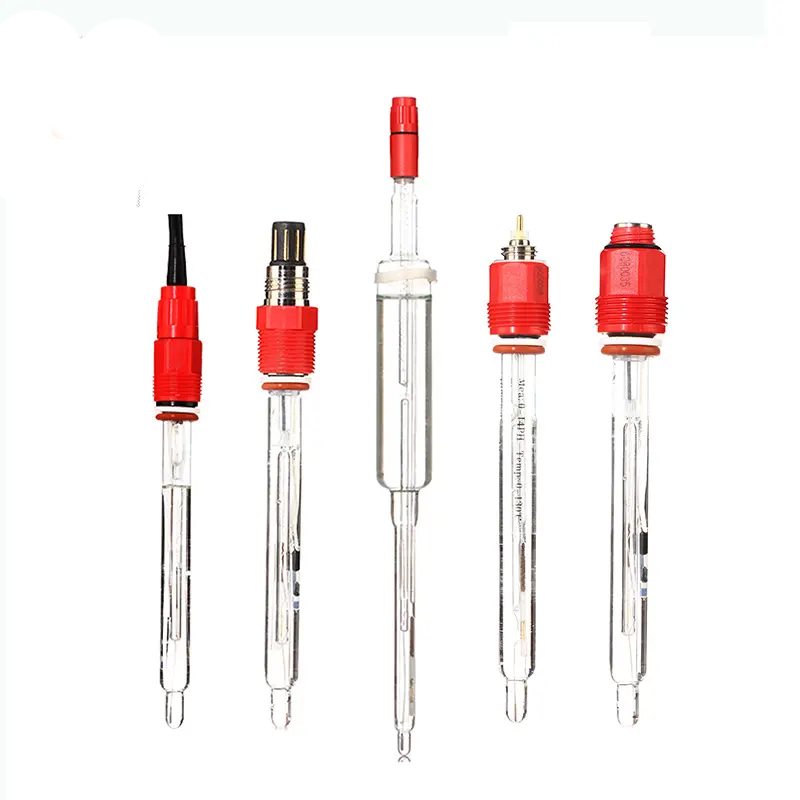
pH5806 Industrial High-Temp Sensor
Shanghai Brand certified precision sensor with multi-junction reference path preventing diaphragm poisoning in dense chemical solutions.
Inquire Wholesale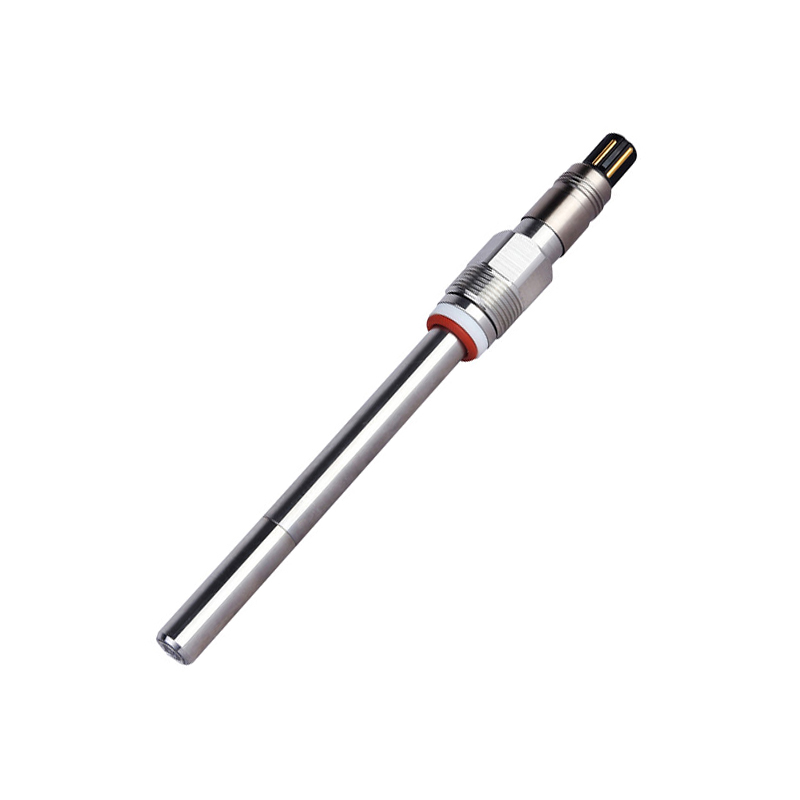
DOG-208FA High Temperature DO Sensor
Advanced electrochemical dissolved oxygen probe with stainless steel sheath, delivering high precision control in pressurized bioreactors.
Inquire Wholesale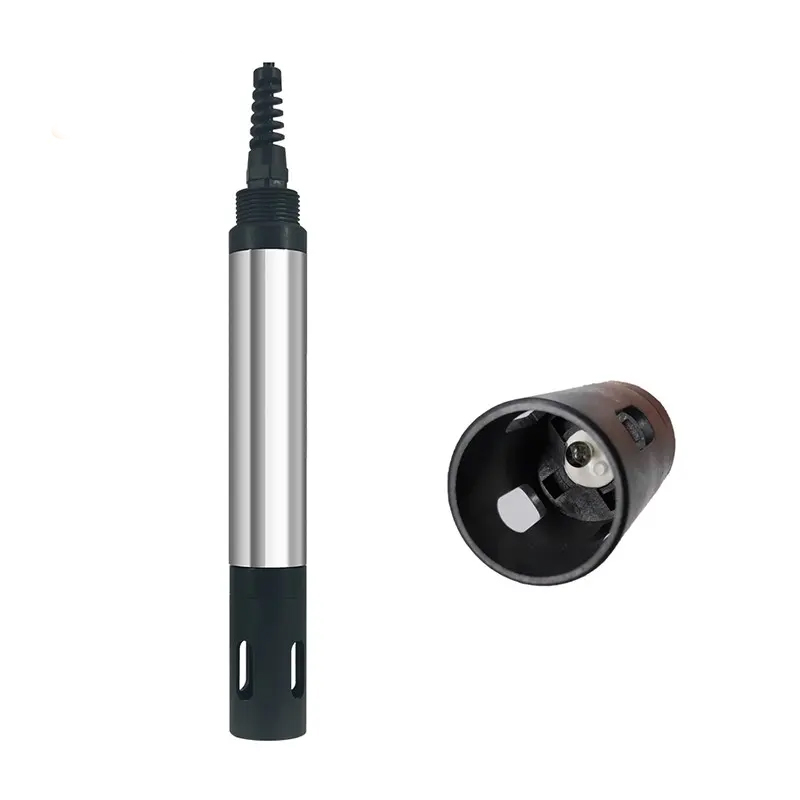
IOT-485 Digital Hardness / pH Probe
Microprocessor-embedded smart sensor outputting direct RS485 Modbus RTU telemetry without requiring external analog transmitter modules.
Inquire Wholesale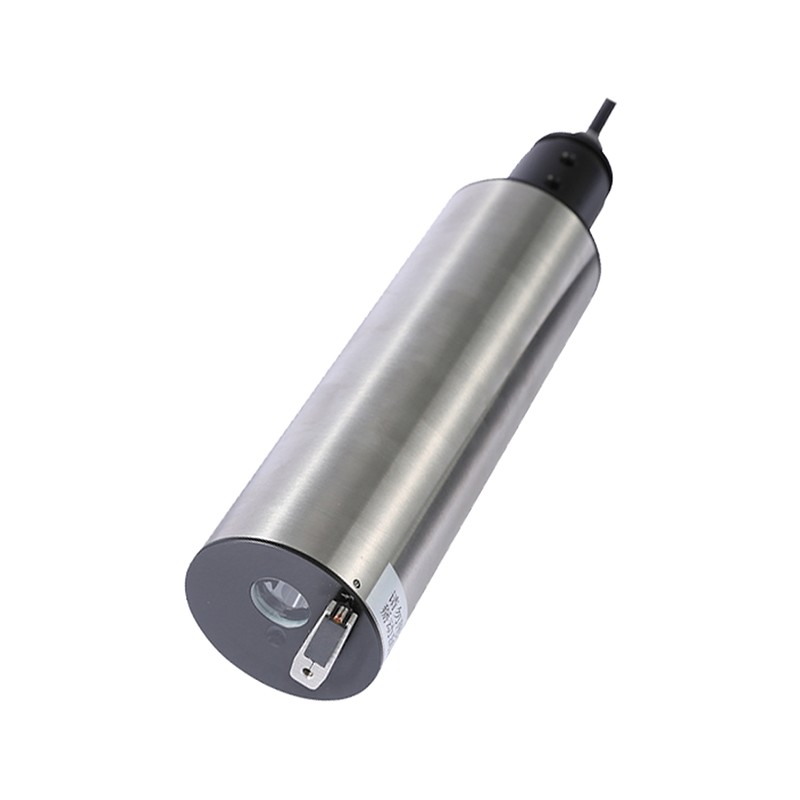
ZDYG-2088 Optical Turbidity & TSS Probe
Infrared 860nm scattered light optical sensor equipped with automatic mechanical wiper cleaning mechanism for zero-maintenance raw water loops.
Inquire WholesaleContinuous Inline Water Hardness Monitoring Architecture
Understanding total hardness quantification, calcium ($Ca^{2+}$) and magnesium ($Mg^{2+}$) ion activity, and the engineering transition from offline EDTA titrations to solid-state digital probes.
Total Hardness Electrochemistry
Water hardness is primarily defined by the aggregate concentration of divalent alkaline earth cations, predominately calcium ($Ca^{2+}$) and magnesium ($Mg^{2+}$), expressed stoichiometrically in mg/L or ppm of equivalent calcium carbonate ($CaCO_3$). While legacy municipal laboratories rely on batch photometric EDTA titrations, heavy industries necessitate real-time, uninterrupted electrochemical measurement. Online water hardness probes utilize specialized Ion-Selective Electrodes (ISE) formulated with neutral carrier ionophores suspended in plasticized polyvinyl chloride (PVC) membranes. This selective matrix drives a stable Nernstian potential difference proportional to the logarithmic activity of free divalent cations in aqueous media.
Nernstian Slope & Matrix Compensation
In thermodynamic equilibrium, divalent ions generate an empirical theoretical slope of approximately 29.58 mV per decade change in concentration at 25°C according to the Nernst equation: $E = E^0 + \frac{2.303 RT}{zF} \log(a_{M^{2+}})$. Modern industrial water hardness sensors solve historical drift limitations through integrated multi-junction liquid references featuring cross-linked, solid-gel polymers and porous annular PTFE diaphragms. This prevents sample matrix cross-contamination, stabilizes junction potentials against volatile ionic strength variations, and ensures continuous baseline accuracy across high-salinity brackish water and low-conductivity industrial condensates.
Digital IoT RS485 Integration
Traditional millivolt sensors suffer signal attenuation and electromagnetic interference (EMI) when analog cables exceed 10 meters. Leading industrial B2B facilities have rapidly adopted smart digital probes equipped with integrated 24-bit analog-to-digital converters (ADC) and high-speed microcontrollers embedded directly inside the sensor casing. These smart water hardness probes output calibrated Modbus-RTU protocol over RS-485 serial communication, enabling direct cable runs up to 1,200 meters into Programmable Logic Controllers (PLCs), Distributed Control Systems (DCS), and Industrial Internet of Things (IIoT) telemetry gateways without intermediate external transmitters.
Engineering Note: Scaling Prevention vs. Chemical Over-Treatment
In steam boiler operations and membrane reverse osmosis (RO) plants, an undetected hardness breakthrough of even 0.05 mmol/L (5 ppm $CaCO_3$) can induce rapid calcium sulfate or calcium carbonate scale precipitation on heat exchange tubes and polyamide membrane barriers. This increases operational fuel expenditure by up to 8% per millimeter of scale layer. Continuous inline hardness probes eliminate the blind spots inherent in 8-hour grab-sample intervals, enabling closed-loop antiscalant chemical dosing that reduces reagent expenditure by 22% while guaranteeing boiler uptime.
China Factory Supply Chain & Scale Advantages
Direct from our 4,632 m² dual facilities in Shanghai Kangqiao and Lingang. Complete vertical ownership from chemical formulation to high-volume assembly lines.
In-House Sensor Fabrication
Unlike trading vendors or repackagers, Shanghai BOQU synthesizes proprietary ionophore PVC blends, glass melting matrices, and reference junctions completely in-house. This gives full control over response times, slope consistency, and batch repeatability.
48-Hour Thermal & Drift Burn-In
Every single water hardness probe and analytical transmitter undergoes rigorous 48-hour continuous thermal cycling (0°C to 80°C) and multi-point calibration verification against certified NIST-traceable standard solutions prior to packaging.
Tier-1 Component Sourcing
Leveraging the Yangtze River Delta electronics hub, our Surface Mount Technology (SMT) PCB assembly lines utilize Tier-1 industrial-grade microprocessors from STMicroelectronics and precision optical elements, ensuring a defect rate below 0.12%.
Direct Wholesaler Economy of Scale
Eliminating multiple tiers of European or North American middleman markups allows our global EPC, OEM, and instrumentation distributor clients to procure certified process instrumentation at 35% to 50% lower capital expense without performance compromise.
Global Enterprise Procurement & Technical Specifications
Comprehensive technical parameters required by B2B mechanical project leads, instrument engineers, and international procurement tender documents.
| Engineering Specification | Industrial Hardness ISE Probe | Digital Smart Modbus Probe | High-Temp SWAS Hardness Probe |
|---|---|---|---|
| Target Chemical Ions | $Ca^{2+}$, $Mg^{2+}$ (Divalent Hardness) | $Ca^{2+}$, $Mg^{2+}$, Total Hardness as $CaCO_3$ | Trace $Ca^{2+}$ & Total Hardness Equivalent |
| Measurement Range | 0.05 – 1,000 mg/L ($CaCO_3$) | 0.01 – 5,000 mg/L ($CaCO_3$) selectable | 0.001 – 50 mg/L (ppb to ppm levels) |
| Resolution & Accuracy | 0.01 mg/L; ±2.5% Full Scale | 0.001 mg/L; ±1.5% Full Scale | 0.001 mg/L; ±1.0% Full Scale |
| Response Time ($T_{90}$) | < 30 seconds at 25°C | < 15 seconds at 25°C | < 20 seconds at stabilized flow |
| Operating Temperature | 0 to 50°C (32 to 122°F) | 0 to 65°C (32 to 149°F) | 0 to 130°C (with sample cooler SWAS) |
| Process Pressure Rating | Up to 4 Bar (58 psi) | Up to 6 Bar (87 psi) | Up to 10 Bar (145 psi) |
| Electrochemical Reference | Double-junction ceramic / Ag/AgCl | Solid gel polymer annular non-clogging | Pressurized electrolyte polymer bridge |
| Output Protocols | Raw mV analog / Pre-amplified | RS-485 Modbus RTU + 4-20mA HART | Dual 4-20mA galvanic isolated + RS-485 |
| Wetted Materials | PVDF / PPS / Viton / PVC ISE | Titanium / PEEK / FKM elastomer | 316L Stainless Steel / Hastelloy C-276 |
| Mounting Connection | NPT 3/4" male thread | PG13.5 / 1" NPT immersion or flow-cell | DN25 Sanitary Tri-clamp or SWAS flow block |
OEM & ODM Customization Protocol for System Integrators
Shanghai BOQU delivers end-to-end bespoke services for equipment manufacturers worldwide: private white-label laser etching, custom cable materials (PTFE/PUR high-temperature shielded cables up to 50 meters), customized Modbus register map addresses, specialized flow-through cell manifolds, and unique firmware algorithms tuned for proprietary industrial water matrices.
Localization Support & Compliance Assurance
Built to meet strict global environmental, electrical, and process safety regulations, ensuring seamless import customs clearance and municipal engineering acceptance.
European Union Directives (CE & RoHS)
All BOQU digital sensors and analytical controllers comply with EU Directive 2014/30/EU for Electromagnetic Compatibility (EMC), guaranteeing immunity against heavy industrial motor, pump, and VFD interference. Materials comply strictly with RoHS 2011/65/EU and REACH regulations, eliminating toxic heavy metal contaminants.
Sanitary & Food Grade Safety (FDA)
For beverage bottling, dairy processing, and pharmaceutical purified water loops, wetted sensor polymers, silicone seals, and titanium housings utilize certified FDA 21 CFR §177.2600 compliant materials with USP Class VI biological reactivity clearance, preventing chemical leaching under clean-in-place regimes.
Regional Field Service & Logistics
With localized project deliveries across Southeast Asia, North America, the European Union, the Middle East, and Latin America, BOQU supplies complete factory calibration certificates, international HS code documentation for expedited customs clearance, and dedicated bilingual field engineering application support.
High-Impact Localized Application Scenarios
Continuous online water hardness quantification delivers critical ROI across complex industrial facilities where scale deposition or chemical excess causes costly unplanned downtime.
Power Generation & Thermal Boilers (SWAS)
In high-pressure boiler feed-water loops, water hardness must remain strictly below 0.005 mmol/L (0.5 ppm $CaCO_3$). At temperatures exceeding 350°C in the steam generator, trace calcium deposits trigger catastrophic localized tube overheating and blister bursts. BOQU water hardness probes integrate into Steam and Water Analysis Systems (SWAS), coordinating with sample conditioning coolers to deliver real-time warning before hardness reaches boiler economizers.
Industrial Reverse Osmosis (RO) Plants
Polyamide spiral-wound reverse osmosis membranes are vulnerable to irreversible calcium carbonate and calcium sulfate crystallization when operating at high recovery rates (75%–85%). Inline hardness probes placed at the pre-treatment sand-filter outlet and upstream of anti-scalant dosing pumps monitor water softening ion-exchange exhaustion, triggering automated valve backwashing only when resin beds are truly depleted.
Industrial Evaporative Cooling Towers
In industrial cooling circuits, evaporative water loss continuously concentrates dissolved minerals, escalating the Langelier Saturation Index (LSI) toward aggressive scale-forming conditions. By linking our RS485 Modbus water hardness probes directly to cooling tower blow-down bleed valves, plant engineers automate cycle of concentration (COC) management, saving millions of gallons of makeup water annually.
Pharmaceutical Purified Water & WFI
Strict compliance with European Pharmacopoeia (EP), United States Pharmacopeia (USP), and Chinese Pharmacopoeia (ChP) mandates continuous verification of feed-water quality prior to double-pass RO and Electro-deionization (EDI) polishing stacks. Hardness slippage rapidly fouls EDI concentrate chambers, ruining high-purity conductivity specifications below 1.3 µS/cm.
Municipal Water Softening & Distribution
Municipal water authorities soften ground and surface aquifers to provide domestic drinking water within balanced aesthetic and pipeline protection parameters (typically 60 to 120 mg/L $CaCO_3$). BOQU online analyzers continuously stream network hardness levels to centralized SCADA dashboards, maintaining stable pipeline protection and regulatory compliance.
Semiconductor Ultrapure Water (UPW)
Microelectronic semiconductor fabrication requires complete absence of multivalent metallic cations to prevent gate oxide breakdown on nanometer wafers. Inline hardness sensors monitor pre-treatment softening stages, providing early warning telemetry that prevents irreversible divalent cation contamination across costly polishing mixed-bed resin filters.
Emerging Trends in Water Hardness Instrumentation
The industrial water analysis industry is undergoing a generational shift driven by solid-state chemistry, AI-assisted self-diagnostics, and reagent-free optical monitoring.
AI Predictive Electrode Drift Compensation
Traditional ion-selective membranes suffer from gradual baseline drift caused by ionic fouling and organic coatings. Next-generation BOQU smart probes integrate on-chip edge computing algorithms that analyze temperature shifts, impedance dynamics, and slope decay in real time. The sensor automatically calculates dynamic calibration coefficients, predicting required maintenance 14 days before data degrades.
Solid-State Polymer Reference Electrolytes
Liquid and gel reference electrodes eventually fail due to electrolyte depletion or aperture clogging from suspended solids. The development of polymerized cross-linked solid-state reference junctions eliminates liquid junction outflow entirely. This advances sensor operating lifespan from 6 months up to 24 months in continuous heavy industrial service with zero refilling.
Direct Cloud IoT & Zero-Reagent Analysis
Wet-chemical colorimetric analyzers require continuous restocking of EDTA and buffer reagents, creating recurring operational costs and chemical waste. Emerging solid-state digital hardness probes eliminate chemical reagents entirely. With direct 4G/NB-IoT and LoRaWAN wireless telemetry modules, remote field installations report water metrics directly to cloud monitoring platforms.
Frequently Asked Questions for Wholesale Buyers
Clear, direct answers regarding installation, calibration, wholesale ordering, and sensor lifecycles from our engineering team.
What is the core working difference between an ISE water hardness probe and a colorimetric titration analyzer?
What are the typical lifespan and calibration cycles for industrial water hardness probes?
Can the probe differentiate between calcium hardness ($Ca^{2+}$) and magnesium hardness ($Mg^{2+}$)?
What minimum order quantities (MOQ) and lead times apply for OEM/ODM wholesale orders?
Does sample flow velocity and temperature affect hardness probe reading accuracy?
What signal outputs and telemetry protocols are supported for SCADA and PLC connectivity?
Need Custom Engineering Specifications for a Project?
Our senior instrumentation engineers review water composition, operating pressure, temperature limits, and communication specifications to deliver a fully customized project quotation within 24 hours.
Wholesale Precision Sensor Inventory & Solutions
Explore our complete range of certified high-temperature pH, dissolved oxygen, turbidity, and digital water hardness probes engineered for extreme industrial duty.
Wholesale High Temp (0-130℃) pH Sensor
Factory direct high temperature glass electrode, tested for chemical processing, bioreactors, and hot process steam sterilization lines.
Inquire Product
High Temp pH Sensor with PT1000 Sensor
Precision temperature-compensated electrode housing with dual diaphragm and anti-poisoning gel reference for volatile conditions.
Inquire Product
High-Temp S8 Connector pH Sensor
Threaded S8 connector with standard PG13.5 process coupling, delivering high mechanical shock resistance and chemical seal security.
Inquire Product
Fermentation Sanitary pH Sensor
Sanitary biotechnology probe engineered to survive repetitive 130°C autoclave steam cycles without reference drift or signal decay.
Inquire Product
pH5806 Steam Sterilizable Sensor
Shanghai Brand certified industrial glass electrode with specialized reference pathway for fermentation broth and heavy chemical reactors.
Inquire Product
DOG-208FA High-Temp DO Sensor
Continuous electrochemical dissolved oxygen monitoring probe with sanitary fittings for aerobic bioreactors and hot process pipelines.
Inquire Product
IOT-485 Smart Digital Hardness / pH
RS485 Modbus RTU online probe with embedded ADC processing. Plugs directly into SCADA networks without requiring external transmitters.
Inquire Product
ZDYG-2088 Turbidity & TSS Sensor
Scattered light optical technology with built-in wiper cleaning for zero-maintenance operation in raw water intakes and waste streams.
Inquire Product