Enterprise Engineering & Global Wholesale Directory

Wholesale Types Of Turbidity Meter Manufacturers & Suppliers

A comprehensive procurement guide covering 90° Nephelometric, 4-Beam Optical, High-Range Backscatter, and Submersible TSS Water Quality Sensors directly from verified Shanghai manufacturing facilities.

Direct Sourcing Catalog

High-Precision Turbidity & Analytical Instrumentation (Batch 1)

Pre-calibrated in-line transmitters and digital RS485 Modbus sensors engineered to survive harsh process environments, aggressive chemical cleaning, and strict discharge monitoring.


China High-temperature pH Sensor Used Pharmaceutical Fermentation Wholesaler, Supplier
Bioprocess & Fermentation
China High-temperature pH Sensor Used Pharmaceutical Fermentation Wholesaler, Supplier
Specialized steam-sterilizable glass formulation designed for continuous bioprocessing, pharmaceutical batches, and fermenter vessels operating under pressurized cycles.
China High-temperature pH Sensor Used Pharmaceutical Fermentation Wholesaler, Supplier
Wholesale High Temperature (0-130℃) pH Sensor Supplier, Factories
Thermal Line Analysis
Wholesale High Temperature (0-130℃) pH Sensor Supplier, Factories
Heavy-duty industrial electrode engineered to withstand prolonged exposure up to 130℃ with pressurized gel electrolyte to prevent junction poisoning.
Wholesale High Temperature (0-130℃) pH Sensor Supplier, Factories
China High Temperature (0-130℃) pH Sensor With Temperature Wholesaler, Suppliers
Integrated Compensation
China High Temperature (0-130℃) pH Sensor With Temperature Wholesaler, Suppliers
Equipped with internal Pt100/Pt1000 RTD for immediate automatic temperature compensation in volatile chemical and reactor vessels.
China High Temperature (0-130℃) pH Sensor With Temperature Wholesaler, Suppliers
Wholesale High-temperature S8 Connector pH Sensor Manufacturers, Factory
Standardized Quick-Connect
Wholesale High-temperature S8 Connector pH Sensor Manufacturers, Factory
Standard S8 PG13.5 process coupling design providing universal mechanical retrofitting into existing international bioreactor headplates and sideports.
Wholesale High-temperature S8 Connector pH Sensor Manufacturers, Factory
ZDYG-2088-01QX Online Turbidity Sensor
Optical Scattered Light
ZDYG-2088-01QX Online Turbidity Sensor
860nm ISO 7027 compliant optical turbidity and TSS sensor with digital RS485 Modbus RTU interface and optional integrated mechanical wiper cleaning.
Explore ZDYG-2088-01QX Online Turbidity Sensor
pH5806 High Temperature pH Sensor
Awarded Shanghai Brand
pH5806 High Temperature pH Sensor
Engineered specifically for CIP/SIP steam sterilization duty cycles in biotech pipelines, certified under ISO 9001 and CE compliance.
Explore pH5806 High Temperature pH Sensor
DOG-208FA High Temperature DO Sensor
Dissolved Gas Control
DOG-208FA High Temperature DO Sensor
Polarographic dissolved oxygen sensor built with stainless steel housing and resistant fluoropolymer membrane for thermal bioprocesses.
Explore DOG-208FA High Temperature DO Sensor
IOT-485-pH Digital Online pH Sensor
Direct Modbus Native
IOT-485-pH Digital Online pH Sensor
Smart microprocessor-embedded sensor delivering direct digital RS485 communication without requiring an external controller or secondary transmitter.
Explore IOT-485-pH Digital Online pH Sensor
Industrial Metrology Whitepaper

Core Types of Turbidity Meters: Operational Principles & Sensor Physics

Turbidity measurement relies on measuring how undissolved particulate matter scatters, reflects, or attenuates incident light. Evaluating the correct design variant ensures measurement linearity, regulatory adherence, and low total cost of ownership (TCO).

Nephelometric 90° Light Scattering (ISO 7027 / US EPA 180.1)

The global benchmark for clean and municipal drinking water networks. A near-infrared (860 nm) LED or white-light tungsten filament transmits a beam through the sample fluid, and an optical photodiode measures the light scattered at precisely 90 degrees. Ideal for low-turbidity ranges (0–40 NTU/FNU) where high optical sensitivity to tiny suspended solids is critical.

Four-Beam Ratio & Alternating Light Technology

Developed for demanding industrial effluents and biological aeration basins. Utilizing two dual-wavelength optical emitters and two photo-detectors, the analyzer continuously calculates cross-beam optical ratios. This ratio cancels out optical drift caused by dirty lens windows, LED aging, and color interference in the liquid media, vastly extending maintenance cycles.

High-Range Backscatter & TSS Sludge Meters

When particulate density rises beyond 1,000 NTU, light becomes heavily attenuated and multi-scattering renders 90° detectors non-linear. Backscatter sensors place light sources and sensors at 135°–180° orientations to capture reflective back-radiation, enabling linear Total Suspended Solids (TSS) and Mixed Liquor Suspended Solids (MLSS) readings up to 50,000 mg/L.

Laser Turbidimeters for Ultra-Trace Monitoring

Utilizing coherent semiconductor laser sources (650–660 nm), these instruments produce concentrated light beams capable of detecting particles down to sub-micron diameters. Designed for ultra-pure reverse osmosis permeate, semiconductor rinse lines, and final membrane filtration monitoring where readings range from 0.0001 to 1.0000 NTU.

Submersible In-Situ Immersion Probes

Engineered for open channels, surface reservoirs, biological ponds, and marine aquaculture. Constructed from 316L stainless steel, Titanium, or POM plastics with IP68 waterproof ratings. These probes operate submerged without costly sample delivery lines, pump skids, or pressurized bypass manifolds, significantly cutting installation footprints.

Flow-Through Cell Turbidity Analyzers

Mounted inside analytical wall panels or skid assemblies. Process fluid continuously flows through an optical bubble-trap degassing cell designed to eliminate micro-bubbles that falsely scatter light. Widely utilized across municipal intake stations, pharmaceutical pure water loops, and closed boiler feedwater systems.

Technical Benchmark

Engineering Selection Guide: Turbidity Meter Type Comparison

A reference compiled by BOQU application engineers to select optical wavelengths, mechanical housings, and calibration baselines for municipal and industrial water treatment.

Turbidity Meter Class Measuring Principle Wavelength / Standard Typical Measurement Range Primary Industrial Applications Cleaning / Maintenance Cycle
Nephelometric Low-Range 90° Light Scattering 860 nm (ISO 7027) / White Light (EPA 180.1) 0.001 to 40 NTU / FNU Drinking water plants, final filtration, bottling plants Monthly manual check / Ultrasonic wash option
Dual-Beam / 4-Beam Ratio Alternating Multi-Path Ratio 860 nm Near-Infrared 0.01 to 4,000 NTU Industrial wastewater discharge, intake river monitoring Quarterly automated self-cleaning wiper
Backscatter TSS Meter 135°–180° Backscatter Absorption 880 nm Infrared Source 0 to 50,000 mg/L (50 g/L) Activated sludge, MLSS aeration, centrifuge dewatering Integrated mechanical silicone wiper standard
Laser Turbidimeter Forward/90° Coherent Laser 660 nm Semiconductor Laser 0.0001 to 10 NTU Semiconductor ultrapure water, membrane integrity verification Bi-annual optical verification / Zero air purge
In-Line Insertion Sensor Fiber-Optic Direct Insertion Infrared LED Array 0 to 1,000 NTU Brewery wort monitoring, dairy separation, chemical dosing lines CIP compatible (up to 130℃ steam cleanable)
Sourcing Excellence

Chinese Manufacturing Ecosystem & Global Procurement Synergy

Why multinational EPC contractors, process instrumentation distributors, and water system integrators partner directly with Shanghai BOQU Instrument.

End-to-End Vertical Integration

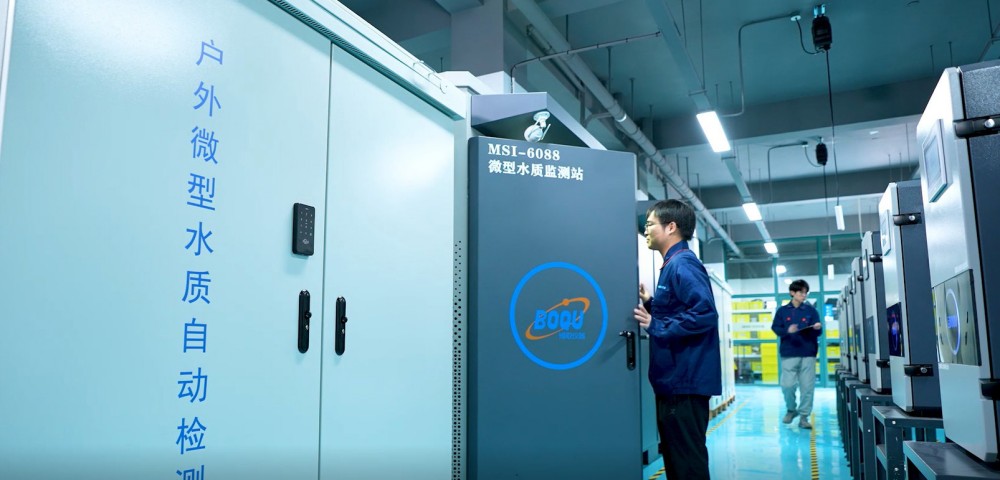
Spanning two modern Shanghai production facilities (Kangqiao and Lingang) covering 4,632 m², our manufacturing control includes optical chamber mold casting, optical path calibration benches, SMT surface-mount circuit board production, and 48-hour continuous burn-in aging racks.

Strict Regulatory Compliance

Instruments conform to ISO 9001 quality management, ISO 14001 environmental frameworks, and European CE directives (electromagnetic compatibility EMC and low voltage LVD). Formulations utilized in sanitary environments comply with FDA requirements, meeting stringent international tender qualifications.

Rapid OEM/ODM Scalability

Serving over 100 countries and regions worldwide, we empower overseas engineering brands with customized enclosure branding, custom cable assemblies, proprietary Modbus register structures, and firmware adapted to localized supervisory SCADA software systems.
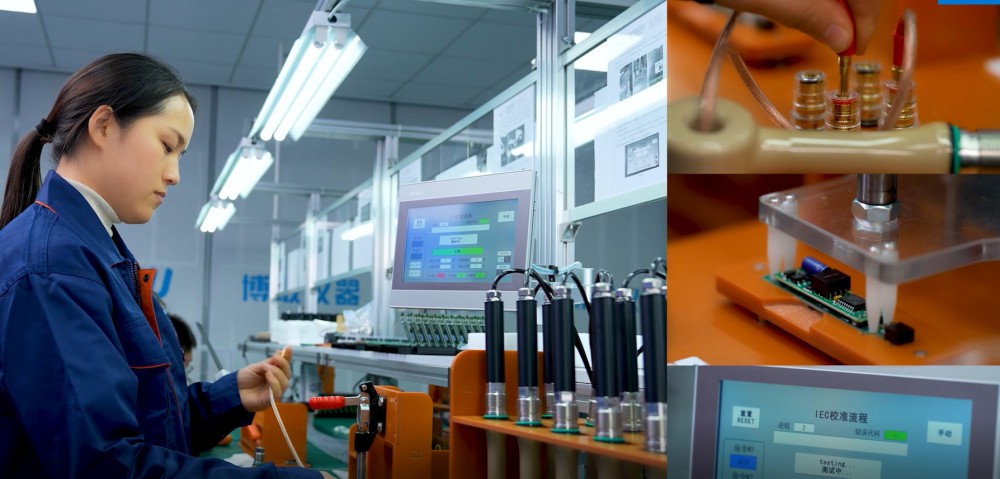
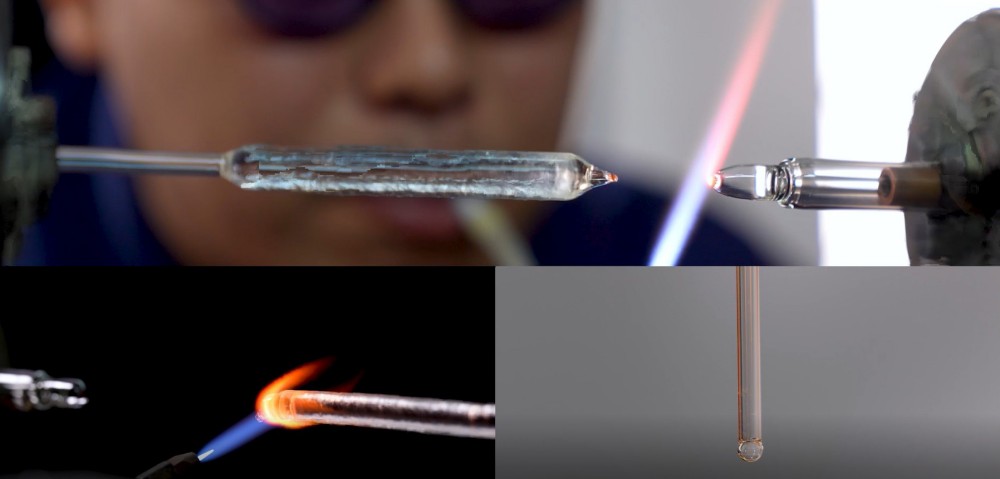
BOQU Lingang workshop production line
Lingang Modern Analyzer Assembly
BOQU Kangqiao workshop sensor production
Kangqiao Precision Optical Fabrication
BOQU Kangqiao calibration area
Multi-Stage Metrology Calibration Benches
Manufacturing Track Record

Enterprise Capacity Metrics & Operational Scale

Verified production milestones ensuring dependable delivery schedules, uniform sensor calibration, and sustained long-term replacement component supply.

2007
Founded In Shanghai
4,632m²
Floorspace Across 2 Facilities
200+
Employees & Engineers
100,000+
Instruments Produced / Year
100+
Export Countries & Regions
2,000+
Enterprise Clients Worldwide
Real-World Deployment

Engineering Solutions Across Diverse Global Environments

Turbidity measurement needs change drastically across municipal drinking networks, intensive aquaculture, biopharma fermentation, and heavy industrial effluent treatment.

Municipal Drinking Water Distribution

Filter breakthrough and pipe wall scour present immediate water safety risks. Low-range 90° nephelometers installed at sand filter effluent headers provide early detection of cryptosporidium or floc pass-through, triggering automated backwashing to protect treated clean water reservoirs.

Wastewater Clarifiers & Biological Basins

In activated sludge basins, maintaining target MLSS (Mixed Liquor Suspended Solids) is essential for efficient biological nitrification. Submersible TSS and backscatter turbidity sensors provide closed-loop control of sludge return pumps (RAS) and waste activated sludge (WAS) dewatering lines.

Industrial Aquaculture & RAS Systems

In high-density recirculating aquaculture systems (RAS), excessive suspended fecal particles damage delicate fish gill tissue and harbor pathogenic bacteria. Real-time turbidity sensors monitor mechanical drum filters in real time, preventing biofilter clogging and reducing livestock mortality.

Thermal & Nuclear Power Generation (SWAS)

Boiler feed water and condenser condensate must maintain extreme purity to avoid turbine blade impingement and boiler scale build-up. In-line trace turbidity sensors identify resin fines migrating out of ion-exchange polishers, safeguarding multimillion-dollar power generation steam circuits.

Biopharmaceutical Fermentation Growth

Turbidimetric optical density (OD600) monitoring tracks biomass growth kinetics inside bioreactors. When paired with steam-sterilizable high-temperature pH and dissolved oxygen probes, engineers achieve complete automated harvest timing and nutrient feed regulation.

Mining, Dredging & Construction Runoff

Discharge permits strictly govern sedimentation levels into natural waterways. Rugged, immersion turbidity meters with polyurethane-jacketed cables operate continuously in high-silt tailings ponds, automating flocculant dosing skids to guarantee compliant environmental release.

Technological Evolution

Emerging Trends Reshaping Online Turbidity & TSS Analysis

The industrial water analysis market is evolving toward autonomous, cloud-connected, and low-maintenance instrumentation.

IoT-Native Edge Computing Sensors

Modern turbidity probes are shedding bulky external wall transmitters. Sensor heads now incorporate high-speed microcontrollers that calculate calibration algorithms, optical path temperature corrections, and Modbus RTU/MQTT protocols internally, pushing telemetry straight to enterprise SCADA platforms.

Predictive Optical Window Diagnostics

Biofouling and algae growth on optical lens surfaces historically caused severe signal drift. Next-generation smart sensors utilize auxiliary reference receivers to measure lens transmittance attenuation, alerting plant technicians exactly when mechanical wiper blades require replacement before measurements degrade.

Multi-Spectral Turbidity & Organics Integration

By blending UV254 absorption pathways with infrared nephelometric sensors, newer generation hybrid probes concurrently calculate Turbidity, TSS, Chemical Oxygen Demand (COD), and Total Organic Carbon (TOC) without chemical reagents, dramatically reducing operational testing overhead.

Direct Sourcing Catalog

Online Process Analyzers & Control Instrumentation (Batch 2)

Complete multi-parameter analytical panels and wet-chemistry systems supporting water distribution compliance, SWAS steam cycles, and industrial effluent limits.


DCA130 Online pH and EC Dual Channel Analyzer
Dual Measurement Panel
DCA130 Online pH & EC Dual Channel Analyzer
Compact controller monitoring pH and Electrical Conductivity simultaneously, reducing panel footprint in reverse osmosis and hydroponic dosing loops.
Explore DCA130 Dual Channel Analyzer
MPG-6099Plus Multi-parameter Water Quality Analyzer
Complete Skid System
MPG-6099Plus Multi-parameter Water Quality Analyzer
Integrated multi-parameter wall system combining turbidity, residual chlorine, pH, conductivity, and dissolved oxygen with flow-cell assembly.
Explore MPG-6099Plus Analyzer
pHG-2081Pro Industrial Online pH Analyzer
Industrial Transmitter
pHG-2081Pro Online pH Analyzer
Rugged industrial transmitter featuring isolated 4–20 mA outputs, dual relay setpoints, and RS485 communication for closed-loop chemical dosing.
Explore pHG-2081Pro Online pH Analyzer
SJG-2083CS Online Acid and Alkali Concentration Meter
Toroidal Conductivity
SJG-2083CS Online Acid & Alkali Concentration Meter
Inductive electrodeless sensor engineered to track high-concentration caustic and acid lines in Clean-In-Place (CIP) systems without fouling.
Explore SJG-2083CS Concentration Meter
Online Residual Chlorine Analyzer
Constant Voltage Cell
Online Residual Chlorine Analyzer
Amperometric analyzer with integrated pH compensation delivering accurate free chlorine and chlorine dioxide dosing across clean water networks.
Explore Residual Chlorine Analyzer
Online Silicate Phosphate Sodium Hydrazine Analyzer
SWAS Wet Chemistry
Online Silicate / Phosphate / Sodium / Hydrazine Analyzer
Trace colorimetric monitoring for high-pressure power plant boilers, identifying parts-per-billion chemical impurities to prevent turbine deposition.
Explore SWAS Trace Analyzers
TOC-3042 Online TOC Analyzer
Ultrapure Water Analytics
TOC-3042 Online TOC Analyzer
Continuous UV oxidation Total Organic Carbon analyzer meeting pharmacopeia compliance for Purified Water (PW) and Water For Injection (WFI).
Explore TOC-3042 Online TOC Analyzer
Online COD TP TN Ammonia Nitrogen Analyzer
Environmental Compliance
Online COD, TP, TN, NH₃-N & Heavy Metal Analyzer
Automated photometric wet-chemistry stations delivering real-time regulatory discharge reporting with self-calibration and fault diagnostics.
Explore Discharge Analyzers
Technical & Commercial FAQ

Frequently Asked Questions by Overseas B2B Buyers

Essential guidance on choosing optical standards, calibrating instruments, establishing communication architectures, and arranging wholesale OEM production.

What is the difference between ISO 7027 and EPA 180.1 turbidity measurement standards?
The fundamental distinction lies in the optical light source and detector wavelength. ISO 7027 requires an infrared LED light source emitting at 860 nm ± 30 nm. Infrared light is non-visible and remains virtually unaffected by inherent water coloration (such as yellowish tannins in surface water), making it the dominant standard across Europe and Asia. In contrast, US EPA 180.1 requires a tungsten-filament lamp operating between 400 and 680 nm. Tungsten lamps offer superior sensitivity to microscopic colloids below 1 NTU but are susceptible to color interference. BOQU manufactures both ISO 7027 infrared sensors and EPA-compliant optical assemblies to meet regional regulatory demands.
Is Shanghai BOQU Instrument a direct manufacturer or a trading company?
Shanghai BOQU Instrument Co., Ltd. is a direct, verified manufacturer founded in 2007. We operate two production hubs in Shanghai (Kangqiao Town and Lingang Free Trade Zone) covering 4,632 m² of workshop space with over 200 employees. We engineer circuit boards, develop proprietary sensor firmware, cast optical chambers, calibrate optical paths, and assemble completed transmitters entirely in-house, manufacturing over 100,000 analytical instruments every year.
How do your turbidity meters prevent fouling in biological and wastewater environments?
For biological aeration basins, industrial effluents, and sludge lines, BOQU turbidity and TSS sensors are equipped with an integrated mechanical silicone wiper system. The wiper can be programmed via controller menu or Modbus register commands to clean the optical sapphire glass windows automatically at configurable intervals (e.g., every 30, 60, or 120 minutes). Additionally, our dual-beam ratio models automatically compensate for residual lens film by computing transmission-to-scattered signal proportions.
What communication protocols and output options are available for plant integration?
BOQU online analyzers and digital sensors support isolated 4–20 mA analog loops (active or passive), configurable SPDT relay alarm outputs for high/low setpoint chemical dosing, and digital RS485 Modbus RTU serial communications. Furthermore, our standalone smart IoT sensors output Modbus RTU directly from the submerged probe head, allowing integrators to connect 10–30 sensors to a single PLC rack or IoT edge gateway without buying intermediary controllers.
How often do optical turbidity sensors require calibration, and what standards are used?
Under normal operating conditions, modern solid-state infrared LEDs exhibit negligible drift, typically requiring calibration verification only once every 3 to 6 months. Turbidity meters are calibrated against Formazin primary standard suspension solutions or secondary polymer standards (such as AMCO Clear). Zero-point calibration is easily performed using deionized water filtered through a 0.2-micron membrane.
Do you offer white-label OEM, private labeling, and custom engineering services?
Yes. A major portion of our export volume serves international distributors and system brands under OEM/ODM agreements. We offer custom-colored polycarbonate or cast-aluminum transmitter housings, private-label silk-screen logos, bespoke submerged cable lengths up to 100 meters, specialized wetted material selection (Titanium, Hastelloy, PTFE), and tailored Modbus register maps to maintain backward compatibility with legacy customer control software.

Accelerate Your Water Quality Infrastructure Project

Whether you are designing a 500 MLD municipal filtration plant, outfitting a pharmaceutical fermentation cleanroom, or expanding an instrumentation distribution network, BOQU application engineers deliver rapid quotes, comprehensive technical submittals, and dependable factory pricing.