
Featured Industrial Water Quality Sensors & Online Analyzers
Manufactured in Shanghai across 4,632 m² of specialized production floor space. Each unit undergoes strict multi-point temperature compensation and 48-hour continuous stability testing prior to international shipment.

Wholesale High Temperature (0-130℃) pH Sensor
Engineered for extreme thermal process applications, tap water purification cycles, and sanitary steam line sterilization.
View Specifications
China High-temp pH Sensor for Fermentation
Precision electrolytic sensing for sensitive biopharmaceutical lines and high-purity water supply networks.
View Specifications
Wholesale High-temp S8 Connector Sensor
Standard industrial PG13.5 and S8 plug-and-play architecture for inline tap water pipeline installation.
View Specifications
High Temp Sensor with Integrated Temperature
Equipped with internal Pt100/Pt1000 RTD for dynamic Nernst thermal compensation in municipal monitoring.
View Specifications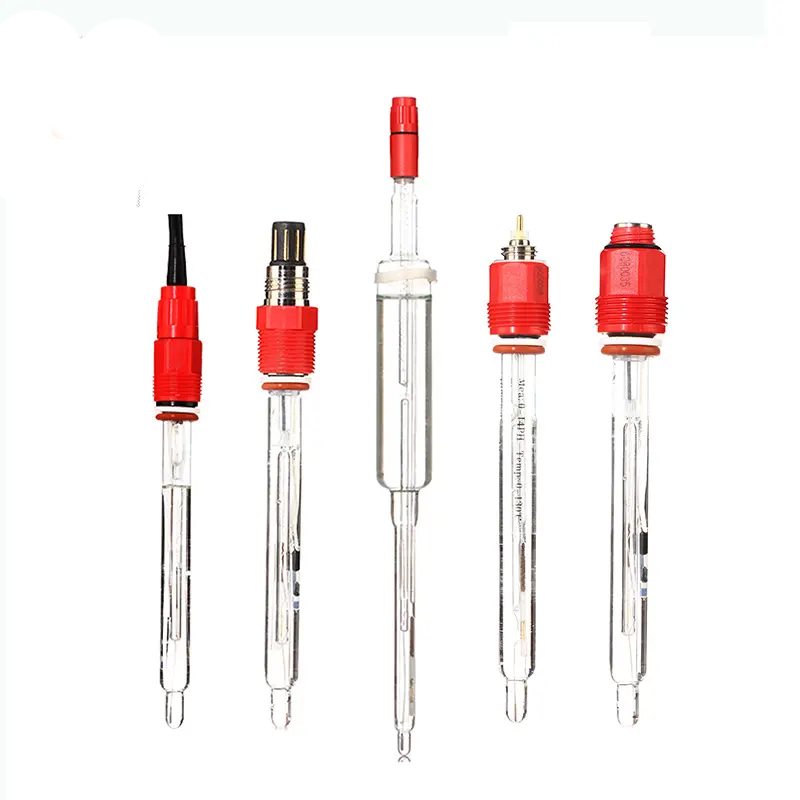
pH5806 Industrial Sensor (Shanghai Brand)
Shanghai Brand certified precision electrode designed to withstand continuous pressure and rigorous sterilization.
View Specifications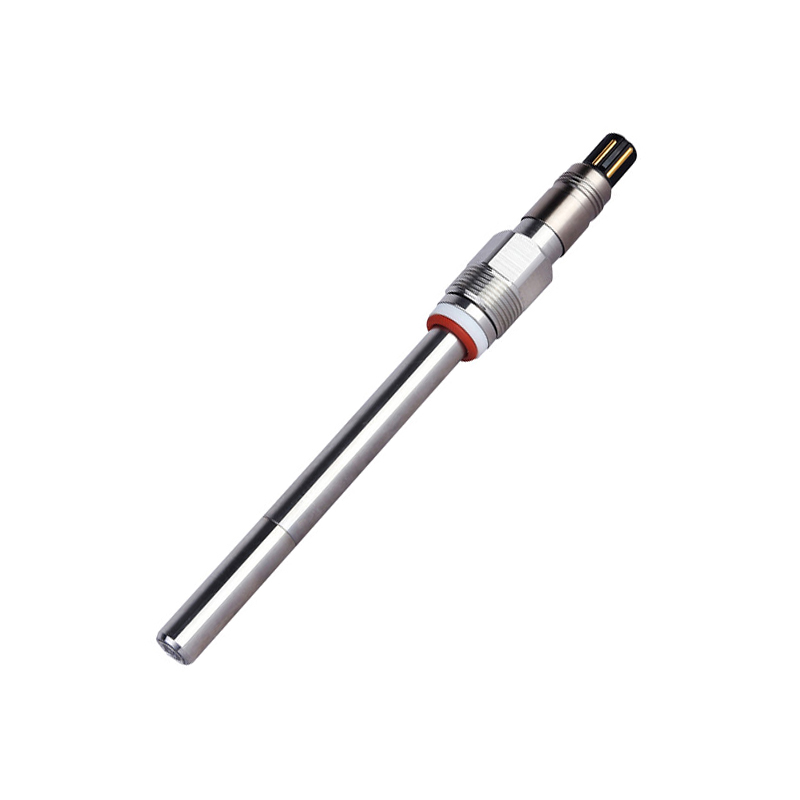
DOG-208FA Optical / Membrane DO Sensor
Essential aeration feedback and dissolved gas tracking for municipal water aeration and primary storage basins.
View Specifications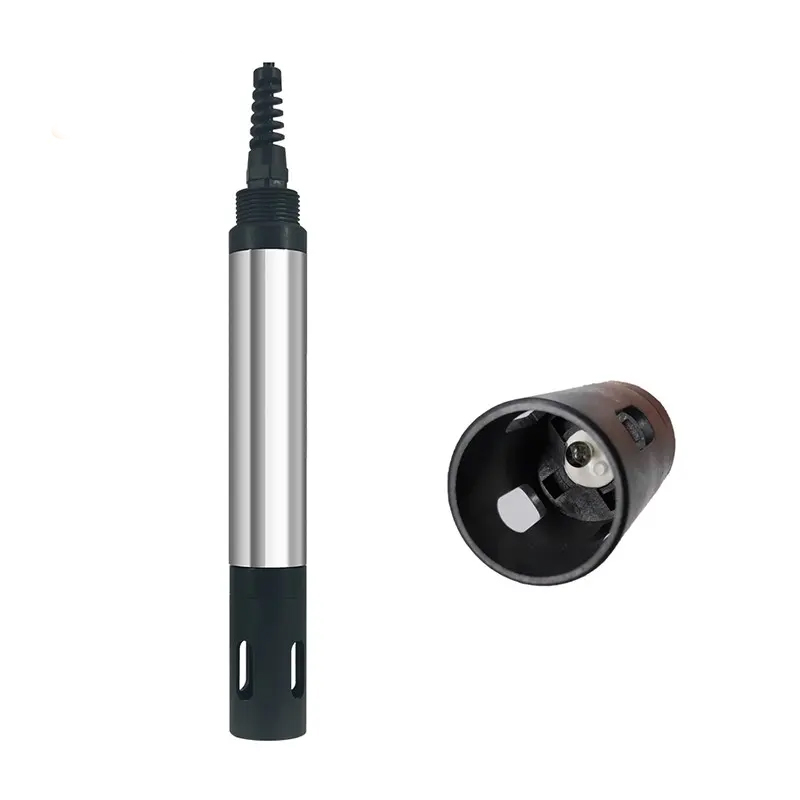
IOT-485 Smart Digital Modbus Sensor
Direct RS485 Modbus RTU connectivity enabling transmitter-free direct integration with SCADA and IoT gateways.
View Specifications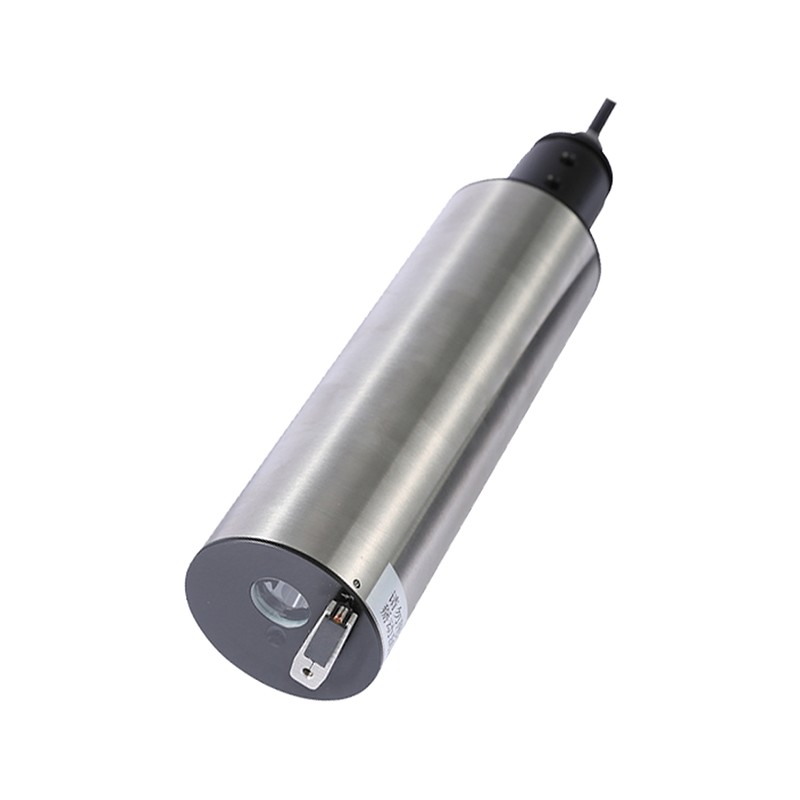
ZDYG-2088-01QX Infrared Turbidity Sensor
90° scattered light optics with self-cleaning wiper, vital for monitoring clarifier performance and tap water clarity.
View SpecificationsThe Global Tap Water Conductivity Monitoring Landscape
How international health directives, aging urban pipe networks, and industrial desalination facilities rely on high-precision electrical conductivity (EC) analysis to verify ionic balance and regulatory compliance.
In modern water utility operations, electrical conductivity (EC) stands as the front-line surrogate metric for total dissolved solids (TDS), salinity concentration, and general ionic purity. Pure water molecules ($H_2O$) possess an extremely low intrinsic conductance—approximately 0.055 μS/cm at 25°C. As mineral salts such as calcium bicarbonate, magnesium sulfate, sodium chloride, and anthropogenic trace ions dissolve into municipal potable water supplies, the solution's capability to transfer electrical current increases proportionally. Consequently, online conductivity transmitters provide utility engineers and plant operators with an instantaneous, reagent-free window into chemical consistency, cross-contamination, and membrane integrity.
Globally, the enforcement of rigorous regulatory frameworks—including the European Union Drinking Water Directive (EU 2020/2184), the United States EPA Safe Drinking Water Act (SDWA), and national potable water standards across Asia (e.g., China's GB 5749-2022)—has transformed online conductivity from a passive checkpoint into an active, automated safety interlock. In regions dependent on coastal reverse osmosis (SWRO) desalination, such as the GCC nations, conductivity instrumentation governs the critical blending ratio between mineralized distillate and subterranean water, maintaining the required 200–800 μS/cm sweet spot necessary for consumer palatability and hydraulic pipe corrosion inhibition.
Regulatory Compliance & Health
Directly governs adherence to WHO parametric limits (typically ≤2,500 μS/cm at 20°C/25°C), preventing acute consumer gastrointestinal irritation and secondary leaching of heavy metals caused by aggressively soft or hyper-mineralized water.
Distribution Anomaly Detection
Sudden step-changes in distribution pipeline conductivity signal catastrophic events: reclaimed wastewater backflow, subterranean aquifer infiltration into cracked distribution mains, or inadvertent coagulant overdosing at the treatment plant.
OPEX & Chemical Optimization
Continuous conductivity feedback enables municipal treatment engineers to automate softening cycles, optimize lime/soda ash dosing, and calculate the Langelier Saturation Index (LSI) in real time to extend multi-million dollar infrastructure lifespans.
Emerging Trends Shaping Conductivity Instrumentation
The paradigm shift from isolated, manual grab-sampling toward self-compensating digital edge-sensors, AI predictive maintenance, and IoT-enabled municipal smart grids.
Transmitter-Free Digital Edge Sensors
Modern installations eliminate fragile analog microvolt signal runs by embedding ADC converters, temperature compensation algorithms, and isolated RS485 Modbus RTU microcircuits directly inside the probe head.
Multi-Frequency AC Impedance
Replacing standard single-frequency DC or simple AC pulses with dynamic multi-frequency excitation sweeps (100 Hz to 10 kHz) to totally eliminate electrode polarization and double-layer capacitive errors.
Predictive Health & Fouling Diagnostics
Embedded machine-learning firmware tracks shifts in polarization resistance over time, warning central plant engineers when mineral scaling, bio-fouling, or electrode erosion necessitates automated CIP or physical inspection.
Low-Power NB-IoT / LoRaWAN Nodes
Battery-powered, ultra-low quiescent current conductivity telemetry units deployed in subterranean inspection vaults, reporting daily conductance trends directly to municipal supervisory cloud interfaces.
Sensor Topology Selection Matrix: 2-Electrode, 4-Electrode & Toroidal
Selecting the ideal cell constant ($K$) and electrode geometry based on ionic concentration, suspended particulate risk, and municipal pipeline operating parameters.
| Electrode Topology | Cell Constant ($K$) Range | Ideal Measuring Span | Working Electrochemical Principle | Susceptibility to Fouling | Primary Municipal Application |
|---|---|---|---|---|---|
| 2-Electrode (Contacting Platinum/SS316L) | $K = 0.01\text{ to }0.1\text{ cm}^{-1}$ | $0.055\text{ to }200\text{ }\mu\text{S/cm}$ | Alternating voltage applied across two parallel or concentric metal surfaces; current measured directly. | High: easily coated by mineral scales ($CaCO_3$) or bio-slime. | Demineralized feed, RO permeate polishers, high-purity laboratory rinse water. |
| 2-Electrode (Industrial Graphite/Titanium) | $K = 1.0\text{ cm}^{-1}$ | $10\text{ to }2,000\text{ }\mu\text{S/cm}$ | Optimized electrode geometry balancing current density and solution ohmic resistance. | Moderate: requires periodic acid wash or cleaning in high-hardness water. | Standard municipal tap water distribution mains, pump stations, domestic tap monitoring. |
| 4-Electrode Multi-Point Contacting | $K = 0.5\text{ to }1.0\text{ cm}^{-1}$ | $1\text{ }\mu\text{S/cm to }200\text{ mS/cm}$ | Outer drive electrodes inject AC current; inner high-impedance sense electrodes measure potential drop. | Low: eliminates cable resistance and largely compensates for electrode polarization. | Raw surface water intakes, municipal blending stations with wide seasonal salinity swings. |
| Toroidal (Inductive Electrodeless) | Virtual $K \approx 2.0\text{ to }5.0\text{ cm}^{-1}$ | $100\text{ }\mu\text{S/cm to }2,000\text{ mS/cm}$ | Two sealed wire-wound toroids: one induces alternating current in the fluid loop; the second detects the induced magnetic field. | Extremely Low: zero metal-to-fluid contact; impervious to abrasive silts, oils, and scales. | Raw river intakes, high-hardness municipal wells, desalination brine discharges. |
Critical Deployment Scenarios for Tap Water Conductivity Meters
Examining five specialized municipal and industrial environments where online electrolytic conductivity monitoring protects human health and capital assets.
1. Municipal Water Treatment & Coagulation
Raw water sourced from rivers or reservoirs exhibits shifting conductivity due to runoff and seasonal rainfall. Inline conductivity probes installed prior to flash mixing help plant operators anticipate coagulant consumption (alum or ferric chloride), which alters overall ionic charge and optimum precipitation pH.
2. Secondary High-Rise Booster Pump Stations
In modern urban architectures, water is stored in intermediate roof tanks and subterranean cisterns. Online conductivity, coupled with residual chlorine and turbidity monitoring (via BOQU MPG-6099Plus panels), prevents stagnant water degradation, bacterial biofilm proliferation, and backflow from commercial HVAC cooling loops.
3. Industrial Food, Beverage & Brewing
Beverage bottling and food processing facilities depend on strict tap water consistency. Mineral conductivity variations directly impact product taste, enzymatic fermentation stability, and yeast health. Continuous conductivity analysis ensures precise RO blending and consistent batch-to-batch quality.
4. Boiler Feed & Industrial Steam Pre-Treatment
Before municipal tap water enters high-pressure boilers or cooling towers, total dissolved minerals must be stripped via softeners and demineralizers. Highly responsive contacting conductivity cells ($K=0.01\text{ to }0.1$) immediately flag resin exhaustion, preventing scale formation and disastrous tube blowouts.
5. Commercial RO Purification & Vending Stations
Commercial tap-water filtration systems and automated drinking water refill kiosks utilize dual-channel conductivity analyzers (such as the BOQU DCA130) to compute membrane salt rejection percentages ($Rejection\% = [1 - (EC_{permeate} / EC_{feed})] \times 100$), triggering automated membrane backwashing.
6. Desalination Re-Mineralization & Blending
Thermal or membrane desalination produces aggressive permeate devoid of minerals. Municipalities re-inject calcium hydroxide and carbon dioxide while monitoring conductivity to maintain pipe passivation, ensure neutral LSI, and satisfy health regulations.
Macro-Engineering Solutions for Smart Municipal Water Grids
Integrating inline conductivity meters into closed-loop telemetry, automated SCADA controls, and comprehensive urban pipe network analytics.
Achieving real-time drinking water safety across vast municipal networks requires transitioning from isolated sensors to integrated telemetry ecosystems. Modern tap water conductivity monitoring systems connect inline sensor hardware directly to supervisory logic engines through standardized industrial protocols:
- Physicochemical Sample Conditioning: Pressurized tap water mains (frequently operating at 4 to 10 bar) are tapped via self-cleaning hot-tap ball valves or routed into depressurized, flow-regulated analysis flow chambers (maintaining 200–500 mL/min laminar velocity) to prevent cavitation micro-bubbles from distorting electrode current paths.
- Temperature Compensation Algorithms: Because electrolytic conductivity in aqueous tap water exhibits a significant thermal coefficient of roughly +1.9% to +2.2% per degree Celsius, BOQU conductivity transmitters execute continuous linear or non-linear temperature compensation referenced to the international standard of 25.0°C (77.0°F), eliminating false alarms triggered by ambient diurnal water temperature shifts.
- Automated Actuation & Rejection: When conductivity surpasses predefined municipal alarm thresholds (e.g., >1,000 μS/cm in treated tap lines), digital controller relays automatically engage pneumatic bypass dump valves, isolating compromised distribution sectors and dispatching localized flush alarms.
SCADA / DCS Integration
Galvanically isolated 4–20 mA current loops, HART, and RS485 Modbus RTU connectivity enable direct tie-in to central utility control systems without external signal isolators or custom protocol converters.
Multiparameter Panel Solutions
Pairing conductivity with optical turbidity, pH/ORP, and amperometric free residual chlorine onto a unified skid-mounted panel (e.g., BOQU MPG-6099Plus) minimizes field plumbing and simplifies utility maintenance contracts.
Cloud & Smart City Telemetry
Wireless cellular IoT telemetry transmits encrypted real-time conductivity, TDS, and water temperature data to municipal dashboards, facilitating water balance mapping and loss monitoring.
Technology Roadmap: Next-Generation Water Analytics
Strategic research and engineering initiatives driving conductivity instrumentation from reactive measurement toward autonomous, predictive infrastructure protection.
Diamond-Like Carbon (DLC) Coatings
Research into doped diamond and graphene thin-film coatings promises chemically inert electrode interfaces virtually impervious to mechanical abrasion, scale adhesion, and strong chemical cleanings.
Miniaturized Toroidal Micro-Sensors
Next-gen high-permeability magnetic cores enable ultra-compact toroidal flow-through sensors compatible with standard 1/2-inch residential plumbing, bringing maintenance-free electrodeless technology to individual domestic taps.
Autonomous Energy-Harvesting Nodes
Harnessing micro-hydro turbines driven by potable pipeline water flow to power continuous conductivity sensing, local edge analysis, and long-range wireless data uplinks without ever requiring battery replacements.
Engineered in Shanghai: BOQU Instrument Co., Ltd.
Founded in 2007 in Kangqiao Town, Pudong New Area, Shanghai, BOQU is an authentic instrument manufacturer operating two specialized production facilities in Kangqiao and Lingang.
Unlike trading companies or brand aggregators, Shanghai Boqu Instrument Co., Ltd. maintains full in-house vertical integration over every production step. From glassblowing and platinum electrode sintering in China's first dedicated high-temperature sensor laboratory to surface-mount PCB assembly, micro-controller firmware programming, and precision NIST-traceable multi-point calibration, every instrument is backed by certified production rigor. Holding ISO 9001, ISO 14001, CE, SGS, and FDA-related credentials, BOQU delivers over 100,000 instruments annually to municipal utilities, EPC contractors, and global system integrators across more than 100 countries.
Founded Year
Production Floor
Staff & Engineers
Annual Output
Export Countries
Enterprise Clients
Frequently Asked Questions by Water Quality Engineers
Authoritative answers to technical and procurement questions from instrumentation engineers, municipal water project managers, and global wholesale distributors.
What is the normal conductivity range for potable tap water?
Typical municipal tap water ranges between 100 and 1,000 μS/cm, depending largely on geographic source geology (limestone vs. granitic aquifers). The World Health Organization (WHO) specifies an upper conductivity guideline of 2,500 μS/cm at 20°C. Water below 50 μS/cm can be unpalatably flat and corrosive to metal plumbing, while levels above 1,500 μS/cm indicate heavy mineralization that can cause scale accumulation in heat exchangers and domestic appliances.
How does an online conductivity meter convert EC to Total Dissolved Solids (TDS)?
Electrical conductivity measures total ionic movement, whereas TDS represents total dissolved solids mass in milligrams per liter (mg/L or ppm). Transmitters compute TDS via the relationship: $TDS\text{ (mg/L)} = EC\text{ (}\mu\text{S/cm)} \times K_{factor}$, where $K_{factor}$ generally ranges from 0.50 to 0.75. For standard tap water dominated by bicarbonate, calcium, and chloride ions, an empirical factor of 0.65 is industry-standard.
Why is temperature compensation essential for accurate tap water conductivity measurement?
Aqueous ion mobility increases with temperature as water viscosity decreases, causing conductivity to rise by approximately 1.9% to 2.2% per degree Celsius. Without automatic temperature compensation (ATC) referenced to 25°C via an integrated Pt100/Pt1000 RTD sensor, identical water measured at 10°C in winter versus 25°C in summer would present a false 30% drift in reported conductivity.
Which cell constant ($K$) should be specified for municipal tap water lines?
For standard potable tap water ($100\text{ to }1,000\text{ }\mu\text{S/cm}$), a cell constant of $K = 1.0\text{ cm}^{-1}$ is optimal. For highly purified post-RO water or demineralized boiler feed, choose $K = 0.01\text{ to }0.1\text{ cm}^{-1}$. For high-salinity raw groundwater, brackish feed, or desalination brine, specify $K = 5.0\text{ to }10.0\text{ cm}^{-1}$ or an electrodeless toroidal sensor.
How frequently must an online tap water conductivity probe be calibrated?
In clean, filtered tap water lines, contacting conductivity cells demonstrate exceptional stability and typically need calibration inspection only once every 6 to 12 months. In high-hardness surface water environments prone to calcium carbonate ($CaCO_3$) scale, a quarterly inspection and mild acid rinse (5% HCl or sulfamic acid) followed by standard KCl buffer verification is recommended.
What communication outputs are available for PLC, SCADA, or cloud integration?
BOQU online analyzers and digital sensors support dual isolated 4–20 mA analog outputs (with configurable spans for EC and Temperature), dual SPDT alarm relays, and high-speed RS485 Modbus RTU digital connectivity. Our IoT smart sensors output Modbus RTU directly from the cable head, enabling direct connection to cellular RTUs without intermediate transmitters.
Integrated Process Transmitters & Advanced Chemical Analyzers
Combine conductivity monitoring with our complete line of industrial transmitters, multiparameter drinking water panels, and trace-level chemical analyzers.
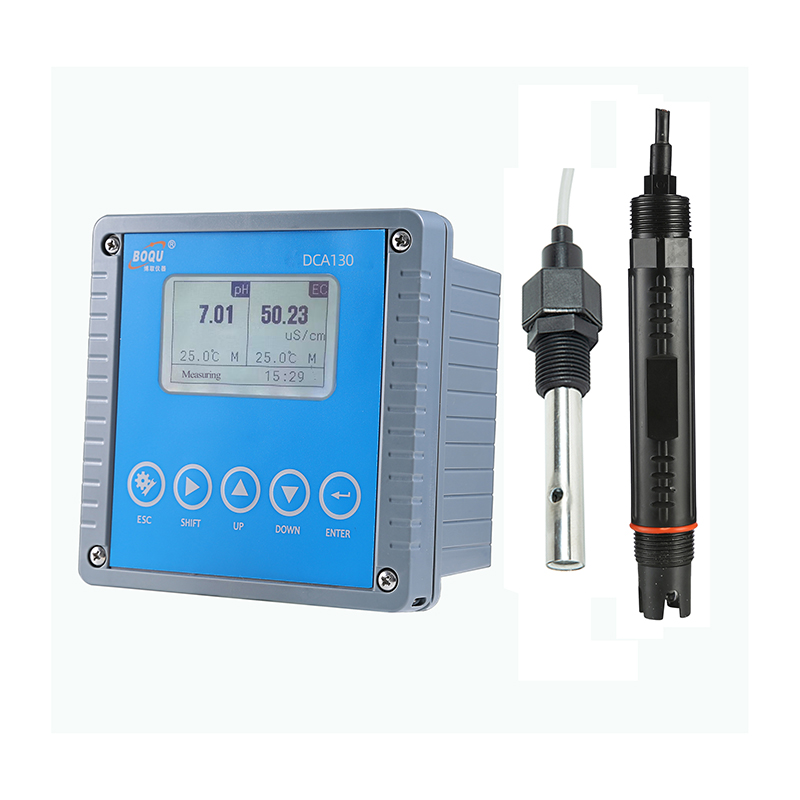
DCA130 pH & EC Dual Channel Analyzer
Simultaneous dual-parameter controller tailored for municipal water blending, RO systems, and hydroponics.
View Specifications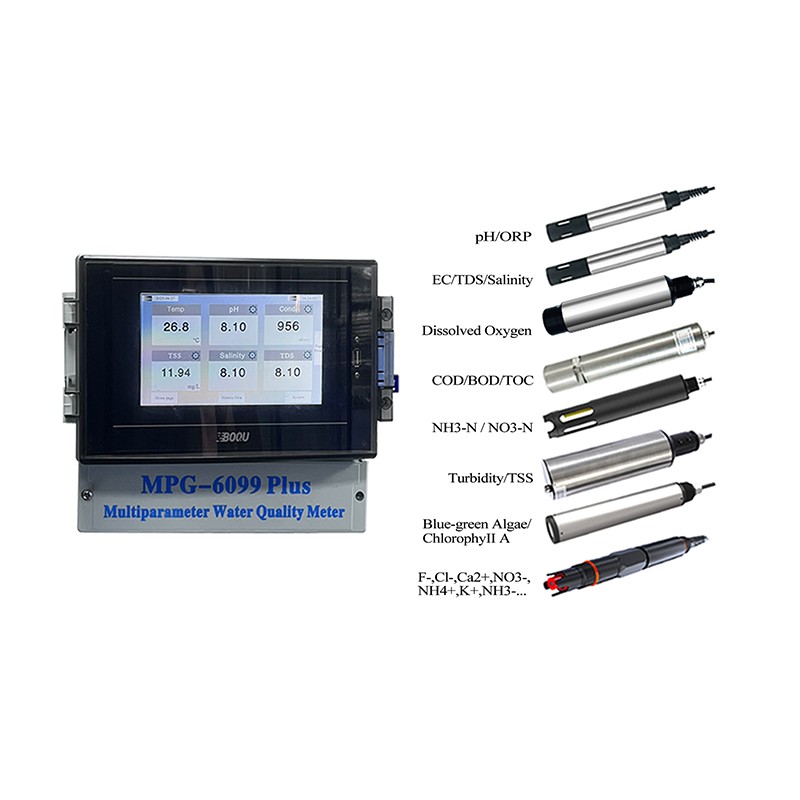
MPG-6099Plus Multi-Parameter Water Station
Pre-plumbed panel combining EC, turbidity, residual chlorine, and pH for secondary tap water pumping stations.
View Specifications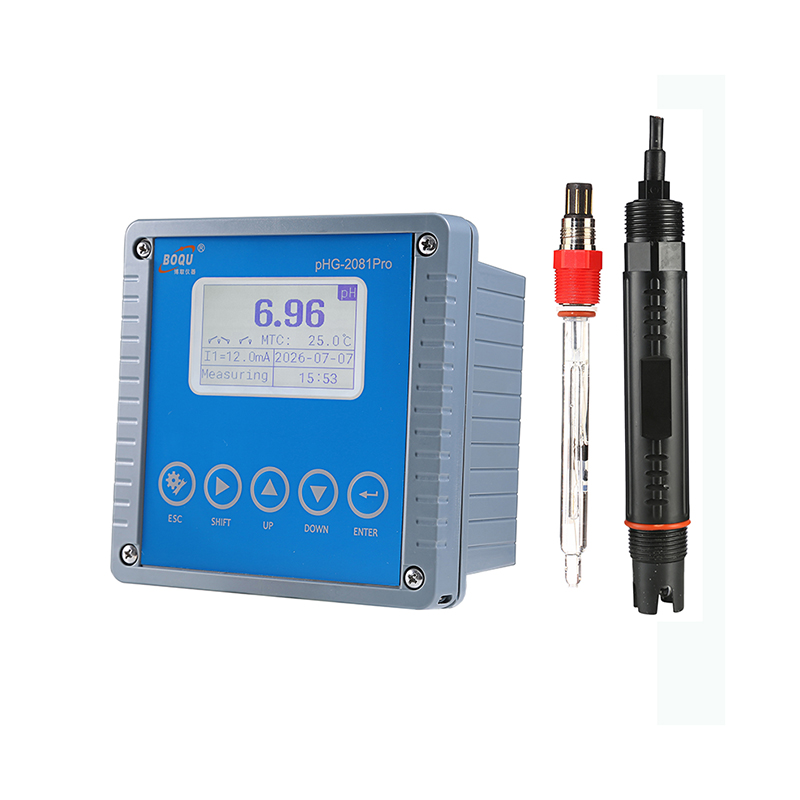
pHG-2081Pro Industrial pH Transmitter
Heavy-duty industrial IP65 analyzer with 4–20 mA, relay alarms, and Modbus for neutralization dosing.
View Specifications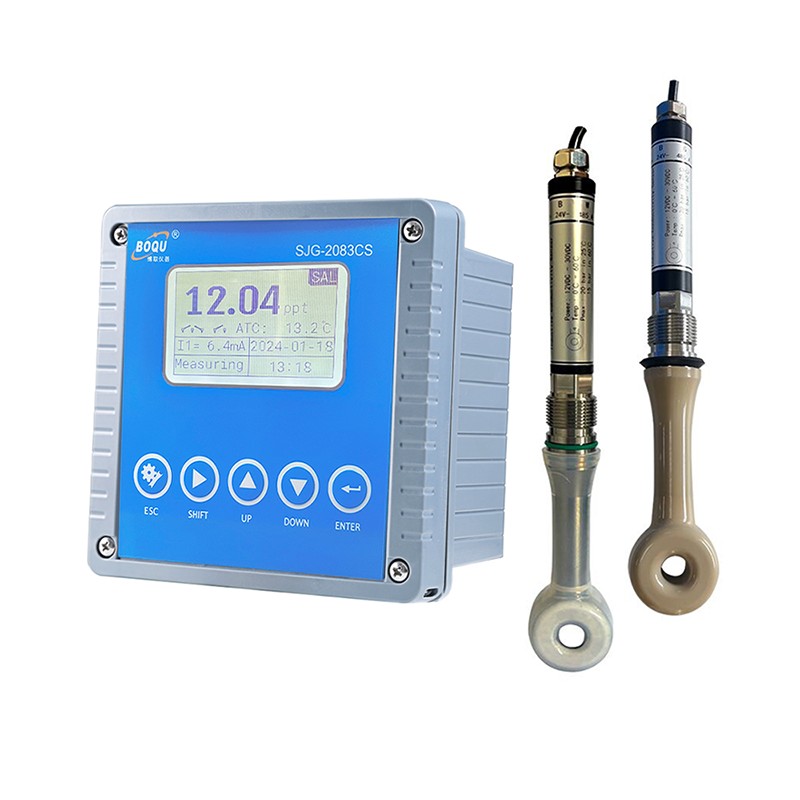
SJG-2083CS Acid & Alkali Concentration Meter
Toroidal inductive conductivity analyzer calibrated for chemical dosing and resin regeneration monitoring.
View Specifications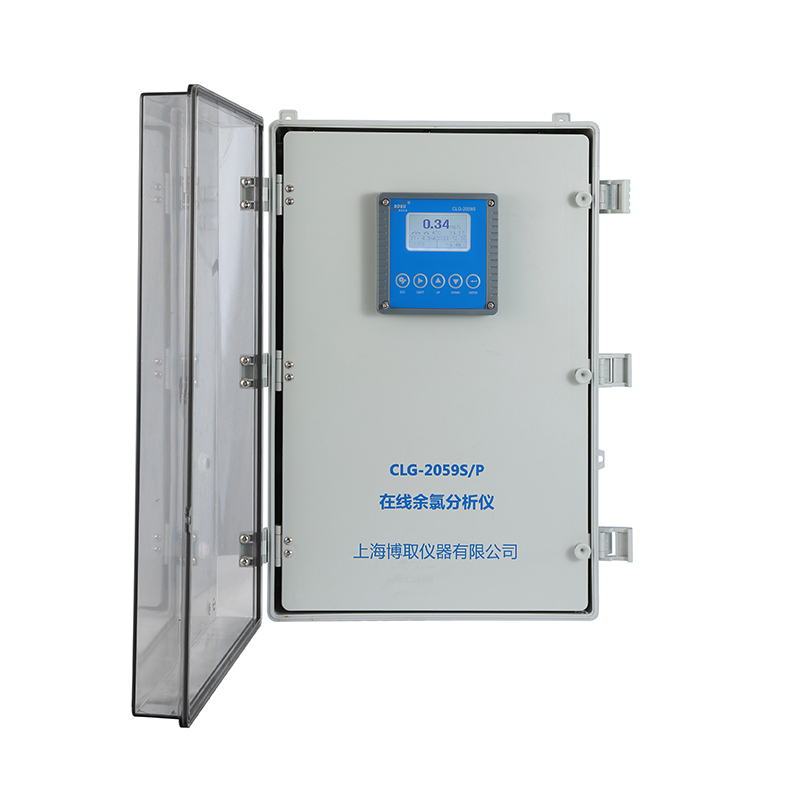
Online Residual Chlorine Potable Analyzer
Continuous reagentless amperometric free chlorine detection for tap water disinfection compliance.
View Specifications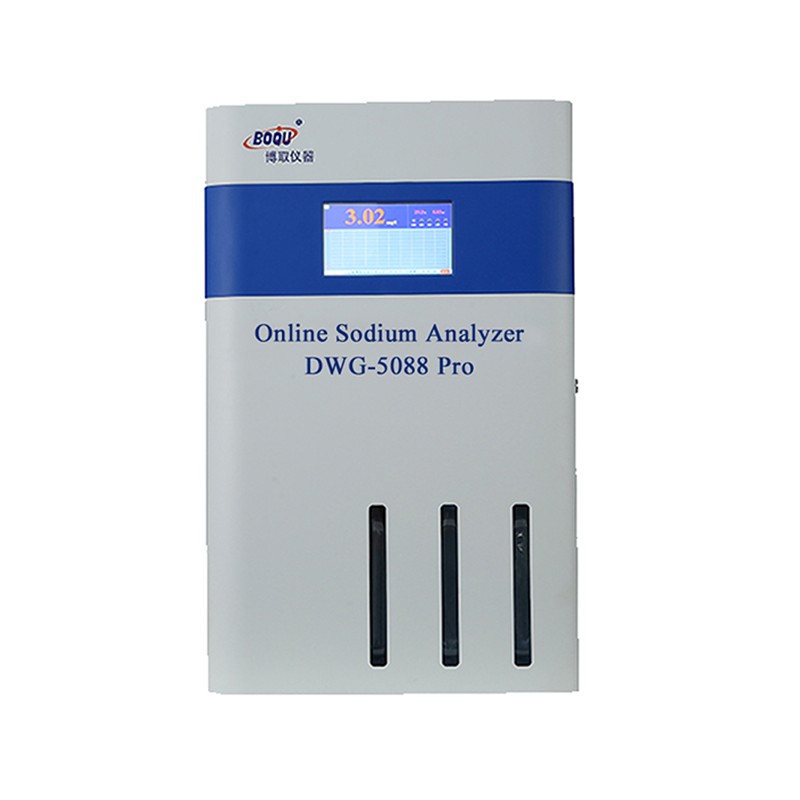
SWAS Silicate & Sodium Trace Analyzer
Colorimetric trace monitoring protecting high-pressure steam turbines from scale formation and corrosion.
View Specifications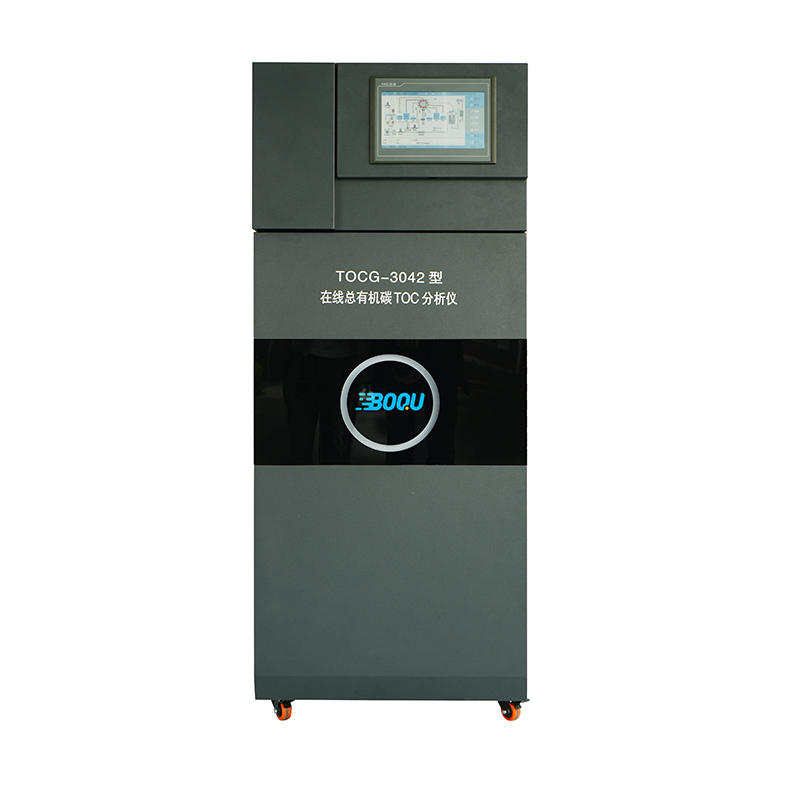
TOC-3042 Online Total Organic Carbon Meter
UV/persulfate oxidation analyzing organic contamination in drinking water intakes and pharmaceutical loops.
View Specifications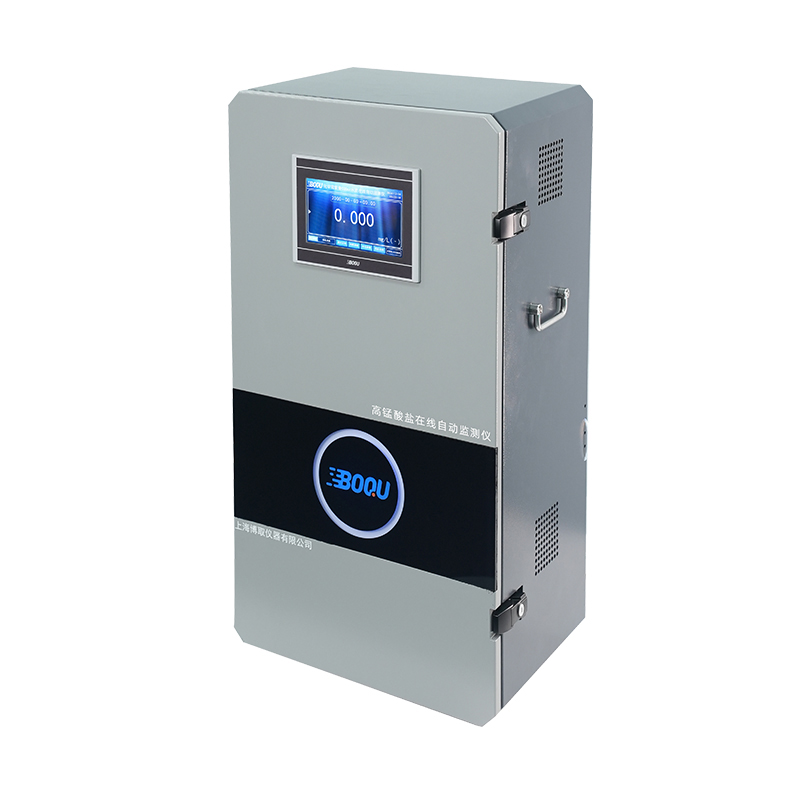
Online COD / TP / TN / NH3-N Analyzer
Automated wet-chemistry analysis verifying municipal discharge and raw intake regulatory compliance.
View Specifications