
High-Precision Process Electrodes & Digital Sensor Nodes
Pre-calibrated, ruggedized industrial sensors engineered with digital Modbus RS485 microprocessors, steam-sterilizable glass bulbs, and chemically inert housings.

China High-temperature pH Sensor for Pharmaceutical Fermentation
Specialized electrolyte gel and ceramic diaphragm built for rigorous bioreactor steam sterilization cycles.

Wholesale High Temperature (0-130℃) pH Sensor Electrode
Continuous inline process electrode offering zero-drift reference chemistry across extreme thermal shifts.

High Temperature (0-130℃) pH Sensor with Embedded Temperature
Built-in Pt1000/Pt100 RTD ensures automated, dynamic microsecond temperature compensation during swings.

Wholesale High-Temperature S8 Connector Process Sensor
Universal PG13.5 mechanical thread paired with watertight S8 electrical plug for direct European transmitter retrofits.
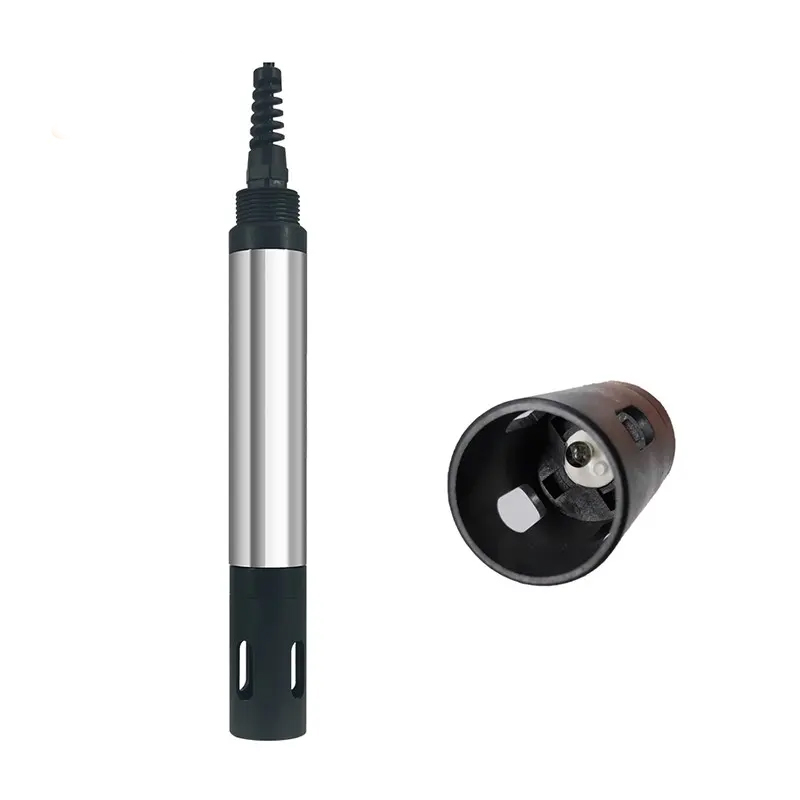
IOT-485-pH Smart Digital Water Quality Sensor
Microprocessor onboard outputs pure digital Modbus RTU directly into SCADA/DCS without extra transmitter boxes.
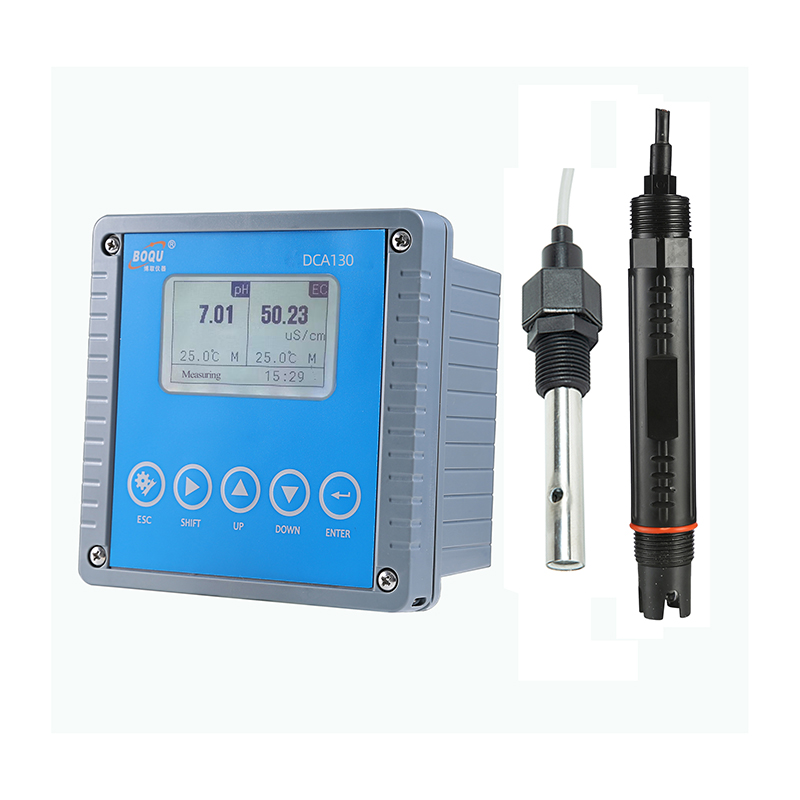
DCA130 Online pH & EC Dual-Channel Transmitting Controller
Simultaneous conductivity and pH closed-loop telemetry controller with programmable high/low dosing relays.
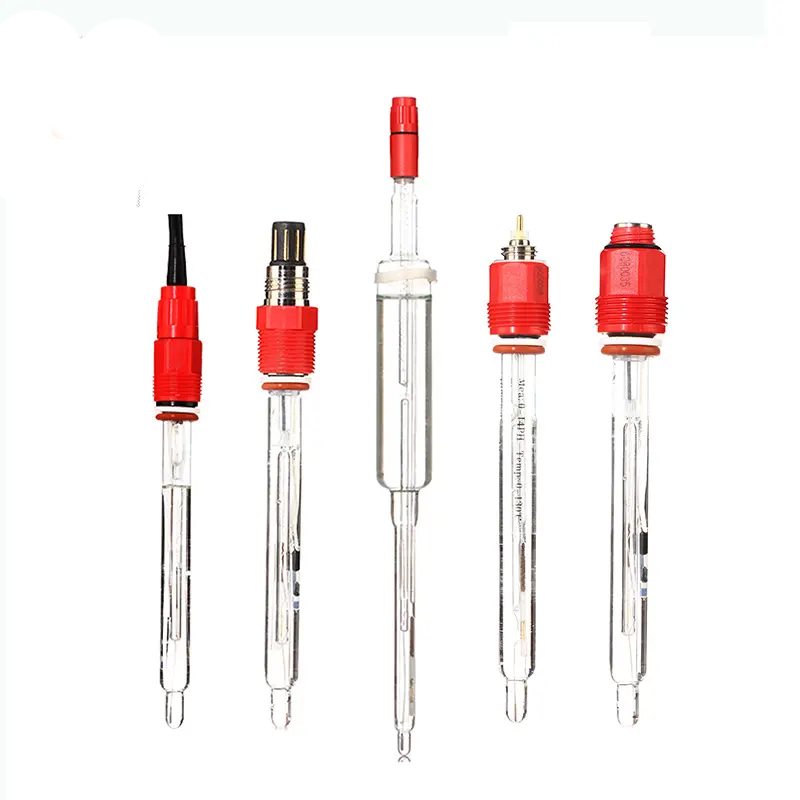
pH5806 Ultra-Durable High-Temperature Process Sensor
Certified Shanghai Brand electrode featuring pressurized polymer gel reservoirs resistant to chemical poisoning.
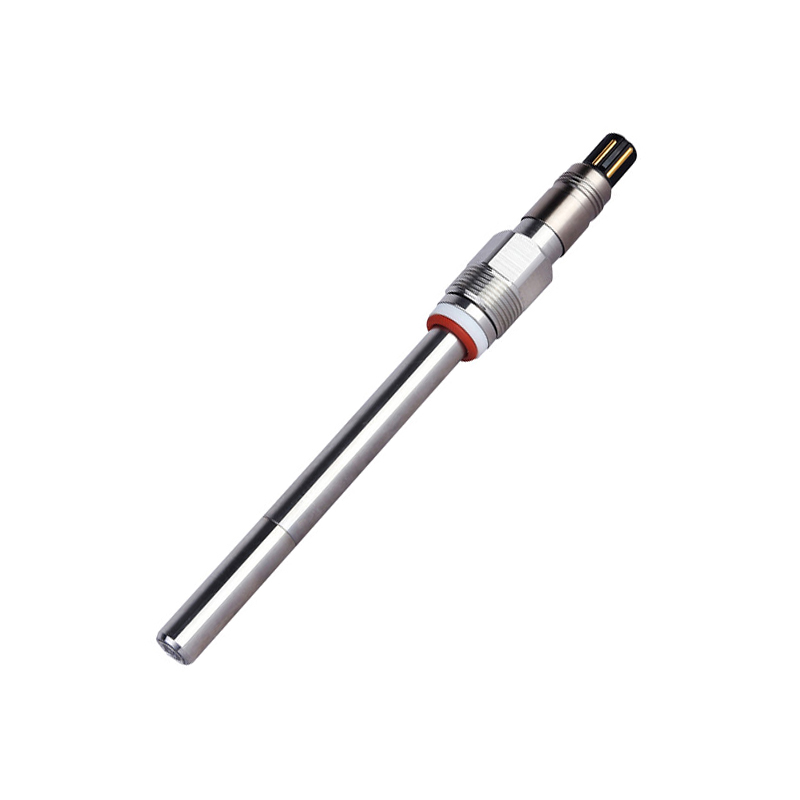
DOG-208FA High-Temperature Dissolved Oxygen Probe
Precision dissolved oxygen sensor engineered for high-temperature aeration lines and demanding bioprocess loops.
Engineering Principles of Industrial RS485 EC Sensing
Demystifying electrical conductivity cell geometries, high-frequency AC excitation, and isolated Modbus RTU telemetry circuits.
In industrial liquid analytical instrumentation, Electrical Conductivity (EC) serves as the fundamental metric for quantifying the ionic concentration, dissolved electrolytes, and total dissolved solids (TDS) of process aqueous solutions. The underlying metrology rests upon electrolytic conduction governed by Ohm’s Law:
where: G = Conductance (Siemens), κ = Conductivity (S/cm or µS/cm), Kcell = Cell Constant (cm⁻¹)
Traditional direct-current (DC) analytical approaches fail inside electrolytic media due to interfacial electrode polarization—the rapid build-up of opposing counter-ion layers at the wetted metal boundary that induces pseudo-capacitive voltage drops. Shanghai BOQU Instrument solves this physical constraint by deploying proprietary bipolar high-frequency AC square-wave excitation (500 Hz to 20 kHz), micro-adjusted dynamically relative to the process conductivity spectrum. This preserves absolute linearity from ultra-pure water (0.055 µS/cm at K=0.01) up to saturated brine and aggressive acids (2,000 mS/cm via inductive toroidal coils).
Contacting vs. Electrodeless Toroidal Conductivity Transducers
Selecting the proper sensor architecture dictates mean time between failures (MTBF), calibration drift frequency, and overall process instrumentation yield:
| Transducer Architecture | Cell Constant (K) | Standard Dynamic Range | Electrode Material / Housing | Primary Failure Modes & Mitigations |
|---|---|---|---|---|
| 2-Electrode Contacting | K=0.01 / K=0.1 / K=1.0 | 0.01 µS/cm to 2,000 µS/cm | 316L Stainless Steel, Titanium, Platinum | Electrode polarization at >2 mS/cm; biological fouling. Mitigated by auto-cleaning flow cells. |
| 4-Electrode Contacting | K=0.5 / K=1.0 | 1 µS/cm to 200 mS/cm | Hastelloy C-276, Gold-plated Platinum | Cable capacitance losses over long runs. Mitigated by on-sensor A/D digitizing microchips. |
| Toroidal (Inductive / Electrodeless) | K=2.0 to 10.0 | 100 µS/cm to 2,000 mS/cm | Virgin PEEK, Polypropylene, PVDF | Toroid magnetic saturation and pipe wall proximity effects. Zero wetted metallic contact eliminates fouling. |
Dynamic Temperature Compensation (α-Factor Integration)
Electrolytic conductivity exhibits an acute positive temperature coefficient, rising typically between 1.5% and 2.5% per degree Celsius due to reduced solvent viscosity and elevated ionic mobility. Uncompensated measurements render raw EC readings useless for regulatory and operational closed loops. BOQU’s smart RS485 sensors embed high-grade Pt1000 Class A Platinum RTD elements placed within sub-millimeter thermal proximity to the wetted sensing face. On-chip firmware processes normalized reference conductivity ($EC_{25}$) using standard linear or non-linear matrix formulas:
where: ECT = Measured EC at Temperature T (°C), α = Temperature Coefficient (%/°C, programmable 0.00-5.00%)
Pudong & Lingang: Direct-from-Source Scale
Eliminate middleman markups and project delays through fully integrated sensor fabrication, precision surface-mount assembly, and ISO-audited aging routines.
China’s industrial water analysis manufacturing ecosystem has evolved from basic glass assembly into high-tier, fully autonomous electronic fabrication. Shanghai BOQU Instrument operates twin automated production workshops in Kangqiao Town and the Lingang Free Trade Zone. This concentrated geographical presence in Shanghai gives BOQU unique strategic supply chain resilience:
- Vertical BOM (Bill of Materials) Control: In-house CNC lathe turning centers machine sensor gland bodies directly from solid certified 316L, Titanium Grade 2, and FDA-compliant virgin PEEK stock. Chemical-resistant epoxy potting and ultrasonic glass blowing are executed within environmentally controlled clean rooms.
- Automated SMT & Surface-Mount Circuit Fabrication: Proprietary RS485 Modbus RTU micro-transceiver boards are printed, placed, and reflow-soldered on multi-axis automated lines. Galvanic isolation barriers (rated up to 2,500 VDC) are embedded directly on the transmitter board to isolate the RS485 communication bus from process electrical noise and parasitic earth loops.
- Pre-Shipment Aging and Standard Solution Calibration: Every single conductivity probe undergoes a mandatory 48-hour continuous thermal stress cycle followed by five-point calibration against NIST-traceable standard solutions (84 µS/cm, 1413 µS/cm, 12.88 mS/cm, and 111.8 mS/cm). Individual calibration offsets, slopes, and cell constants are burned directly into the non-volatile EEPROM of the digital sensor node.
Engineered for Demanding Industrial Duty Worldwide
Field-proven deployments across North America, the European Union, Southeast Asia, and the Middle East.
Commercial Hydroponics & Vertical CEA
Precision nutrient dosers require micro-level fertilizer salinity feedback. BOQU’s compact K=1.0 sensors transmit direct Modbus metrics over multi-drop RS485 daisy-chains, maintaining nutrient solution stability across automated vertical towers and NFT channels.
Industrial RO & Ultrapure Water Loops
Reverse osmosis membrane desalinators track permeate recovery efficiency via real-time rejection rates. Titanium cell-constant K=0.01 probes monitor continuous sub-microSiemens levels down to 0.055 µS/cm with micro-degree thermal compensation.
Thermal & Nuclear Power SWAS Units
Boiler feedwater chemistry relies on Specific, Cation, and Degassed Conductivity to detect micro-contaminations of sodium, chloride, and carbonate. High-pressure stainless sampling assemblies protect steam turbines from pitting corrosion.
Wastewater Treatment & Heavy Effluent
Municipal and industrial discharge outfalls require continuous monitoring to catch sudden chemical dumps and brine breakthrough. Submersible electrodeless sensors bypass organic sludge adhesion without loss of calibration.
Biopharma Fermentation & CIP Systems
Clean-in-Place automated washdowns cycle through 3-5% hot caustic soda (NaOH) and nitric acid (HNO₃) solutions. BOQU PEEK inductive probes track exact acid/base phase interfaces, cutting water rinse volume and chemical consumption.
High-Density Marine Aquaculture & RAS
Recirculating Aquaculture Systems monitor exact salinity and TDS shifts to maintain osmotic balance for delicate fry. Corrosion-proof plastic sensor housings operate submersed indefinitely in harsh marine saltwater tanks.
B2B Wholesale Pricelist & Quantity Discount Tiers
Direct factory pricing based on volume purchase orders, OEM private labeling requirements, and integration specs.
| Model Series & Sensing Geometry | Sample Tier (1-9 pcs) | Mid Tier (10-49 pcs) | Wholesale (50-199 pcs) | Container / OEM (200+ pcs) | Standard Lead Time |
|---|---|---|---|---|---|
|
EC-485-C1 (Contacting 2-Pole) 316L, K=1.0, Modbus RTU, 0-2,000 µS/cm |
$65.00 | $52.00 | $43.00 | $36.00 | 3 - 5 Days |
|
EC-485-UPW (Ultra-Pure Water) Titanium Alloy, K=0.01/0.1, 0.055-20 µS/cm |
$88.00 | $72.00 | $60.00 | $49.50 | 3 - 7 Days |
|
EC-485-TOR (Toroidal Inductive) Virgin PEEK, Electrodeless, 0-2,000 mS/cm |
$220.00 | $185.00 | $155.00 | $128.00 | 7 - 10 Days |
|
EC-485-HT (Sanitary CIP High-Temp) 1.5" Tri-Clamp, 0-130℃, 316L/PEEK Hybrid |
$175.00 | $145.00 | $120.00 | $98.00 | 5 - 8 Days |
|
DCA130 (Dual Transmitter Panel) Simultaneous pH/ORP + EC, 4-20mA, Relays |
$195.00 | $160.00 | $135.00 | $110.00 | 3 - 5 Days |
Wholesale Commercial Terms, OEM Packaging & Private Labeling Options
Shanghai BOQU Instrument maintains an open, flexible engagement framework for qualified distributors, municipal instrumentation EPCs, and analytical system integrators:
- OEM Firmware Customization: Custom register mapping, vendor identification string injection, factory fixed slave ID assignment, and default baud rates (9600, 19200, 38400 bps) provided at zero setup fee on volume orders over 50 units.
- Mechanical & Cable Tailoring: Custom cable lengths up to 100 meters with double-shielded, polyurethane (PUR) or Teflon jacketed cables for severe chemical washdowns; private label laser etching on sensor bodies.
- Payment & Logistics Terms: Standard EXW Shanghai, FOB Shanghai, or door-to-door CIF/DDP air express (DHL/FedEx/UPS). Flexible B2B payment terms (T/T, irrevocable Letter of Credit at sight) supported for recurring framework agreements.
Next-Generation Edge Computing & Multi-Parametric Telemetry
How edge intelligence, predictive sensor diagnostics, and cloud-native protocols are reshaping industrial water analysis.
The water quality monitoring sector is experiencing a paradigm shift away from centralized, passive transmitter architectures toward autonomous, edge-computing intelligent sensors. BOQU’s R&D roadmap focuses on three pivotal vectors of technological evolution:
1. Embedded Edge AI for Real-Time Biofouling & Polarization Detection
Future iterations of our RS485 micro-engine integrate tinyML neural networks running on 32-bit ARM Cortex-M4 silicon. By continuously analyzing high-frequency electrochemical impedance spectroscopy (EIS) signatures across the AC excitation period, the sensor detects early mineral scaling or biological biofilm accumulation *before* it skews analytical readings. The sensor triggers an automated Modbus warning flag requesting ultrasonic pulse cleaning or manual buffer swab.
2. Hybrid Multi-Parameter Solid-State Sensor Heads
Consolidating multi-sensor footprint constraints, BOQU is commercializing integrated sensor cartridges uniting 4-electrode contacting conductivity, optical fluorescence dissolved oxygen, and ISFET solid-state pH within a singular 1-inch NPT submersible housing. This cuts process pipe penetrations by 66% while sharing an isolated RS485 communication line and unified digital register map.
3. Direct-to-Cloud LPWAN Hybrid Gateways
For remote watershed telemetry, rural irrigation ditches, and broad marine aquaculture, BOQU is pairing its ultra-low power (3.3V quiescent) RS485 sensor series with integrated solar micro-gateways running NB-IoT, LoRaWAN, and direct low-earth-orbit (LEO) satellite communications with encrypted MQTT/HTTPS payloads.
International Regulatory Compliance & Factory Quality Assurance
Engineered to international electrical, metrological, and material safety standards for hassle-free project handover.
CE & EMC Electromagnetic Immunity
Certified compliant with EN 61326-1:2013 standards. Onboard 600W TVS surge diodes and 15kV ESD air discharge suppression keep Modbus signals rock-solid next to heavy variable frequency drives (VFDs) and pump motors.
FDA & USP Class VI Bio-Compatibility
Sanitary CIP conductivity probes utilize FDA-compliant virgin PEEK polymers and USP Class VI medical-grade silicone O-rings, providing full traceability documentation required by pharmaceutical validation audits.
ISO 9001 / 14001 Certified Traceability
Every sensor order ships with complete batch calibration test certificates, matching serial barcode numbers, and verified cell-constant test records archived on factory servers for 5 years.
Frequently Asked Engineering & Procurement Questions
Direct technical answers from BOQU’s field instrumentation and firmware development engineers.
What is the standard Modbus RTU register configuration for BOQU RS485 EC sensors?
BOQU digital sensors operate as standard Modbus RTU slaves (Default Slave ID: 0x01, Baud Rate: 9600 bps, 8 Data bits, No Parity, 1 Stop bit). Standard Holding Registers (Function Code 0x03) map continuous analytics:
- Register 40001 - 40002 (0x0000): Float32 (IEEE 754 Big-Endian) Temperature-Compensated Conductivity (µS/cm or mS/cm).
- Register 40003 - 40004 (0x0002): Float32 Process Solution Temperature (°C).
- Register 40005 - 40006 (0x0004): Float32 Raw Uncompensated Conductivity.
- Register 40007 - 40008 (0x0006): Float32 Salinity (ppt / PSU) or TDS (ppm).
Write registers allow remote adjustment of slave ID, baud rates, temperature offset constants, and manual α-factor coefficients directly from your master PLC or SCADA terminal.
How do I choose the optimal cell constant (K) for my application?
Cell constant $K = L / A$ dictates the sensor's physical sensitivity in different ionic concentrations:
- K=0.01 cm⁻¹: Pure and ultra-pure water (0.01 to 20 µS/cm). Semiconductor rinse lines, power plant boiler steam, condensate polishing units.
- K=0.1 cm⁻¹: Low-conductivity clean water (0.5 to 200 µS/cm). RO permeate, pharmaceutical purified water, demineralized water loops.
- K=1.0 cm⁻¹: General industrial and municipal water (10 µS/cm to 10,000 µS/cm). Drinking water plants, cooling towers, commercial hydroponics, environmental rivers.
- K=10.0 cm⁻¹ or Toroidal Inductive: High-salinity solutions (1 mS/cm to 2,000 mS/cm). Seawater desalination feed, brine mining, textile dyeing baths, chemical concentration monitoring (NaOH, H₂SO₄).
What is the maximum reliable transmission distance for RS485 Modbus in noisy industrial plants?
Under the EIA-485 specification, transmission runs up to 1,200 meters (approx. 4,000 feet) are achievable without repeaters using high-grade shielded twisted-pair (STP) cabling (24 AWG, low-capacitance <50 pF/m). For runs exceeding 300 meters or operating adjacent to high-power motor drives, BOQU recommends:
- Terminating the physical end of the daisy chain with a 120-ohm (0.25W) termination resistor across lines A and B to prevent signal reflections.
- Grounding the cable shield braid at one point only (usually the master PLC control cabinet) to prevent ground current loops.
- Utilizing the integrated galvanic isolation of BOQU sensors to prevent potential differences between remote ground nodes.
How does BOQU guarantee calibration consistency and traceability for overseas bulk orders?
Every production lot is validated inside our certified metrology laboratory against primary NIST standard potassium chloride (KCl) analytical solutions. Sensors are calibrated within constant-temperature baths held strictly at 25.0°C ± 0.05°C. The calibration parameters (zero point offset, slope adjustment, and actual calibrated cell constant) are stored permanently in the digital sensor’s onboard flash memory. If field calibration is required later, single-point or two-point calibration can be triggered via Modbus command from your HMI, eliminating the need to bring sensors back to a calibration bench.
Can BOQU sensors replace existing Mettler Toledo, Endress+Hauser, or Yokogawa probes?
Yes. BOQU engineers universal mechanical form factors including 3/4" NPT external threads, PG13.5 process threads, and 1.5"/2" sanitary Tri-Clamp flanges. For legacy analog systems, our sensors interface directly via standard S8/VP6 connectors. For modern digital systems, our Modbus RTU sensors eliminate the high licensing fees and proprietary transmitter locks common to European brands, allowing direct integration into open industrial PLCs (Siemens, Allen-Bradley, Schneider, Omron) at 40-60% lower hardware acquisition costs.
What is the cleaning and maintenance protocol for sensors deployed in heavy effluent or bio-sludge?
For contacting sensors, mineral scaling (calcium carbonate) can be dissolved by soaking the wetted tip in a mild 5% hydrochloric acid (HCl) solution for 5 to 10 minutes, followed by an abundant deionized water rinse. Grease and oil coatings should be cleaned using warm water and a neutral detergent or isopropyl alcohol with a soft nylon brush. For zero-maintenance dirty wastewater installations, BOQU strongly recommends transitioning to our EC-485-TOR Toroidal Inductive sensors, which possess no wetted metallic pins and have an open-bore geometry virtually impervious to sludge accumulation.
Online Analyzers & Multi-Parameter Monitoring Systems
Explore BOQU’s full instrumentation portfolio for industrial wastewater outfalls, clean drinking water treatment, and steam power chemistry.
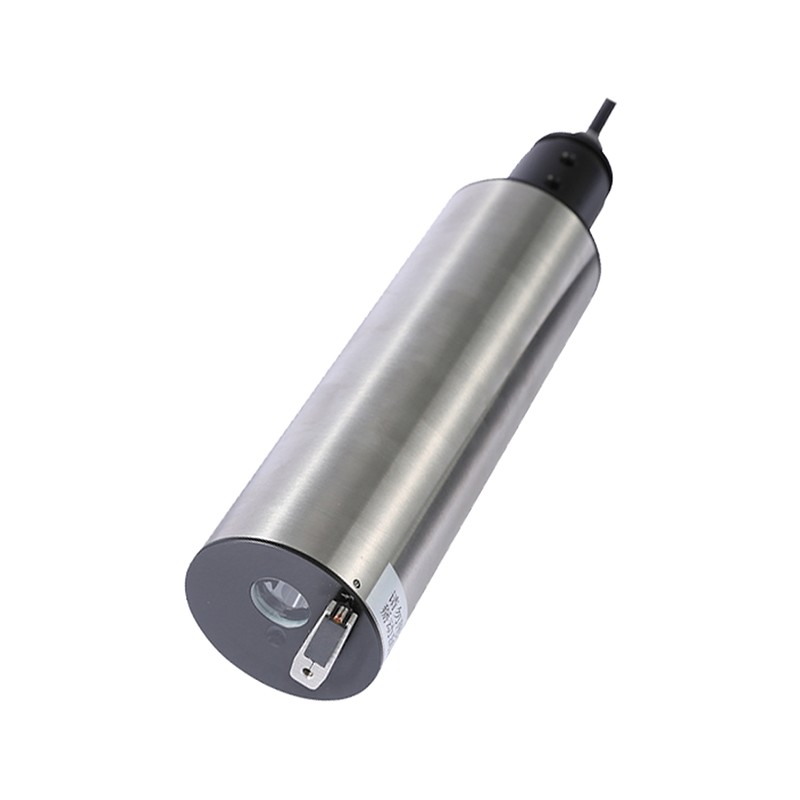
ZDYG-2088-01QX Digital Optical Turbidity Sensor
Infrared 860nm scattered light sensor with integrated mechanical wiper for sludge and municipal effluent.
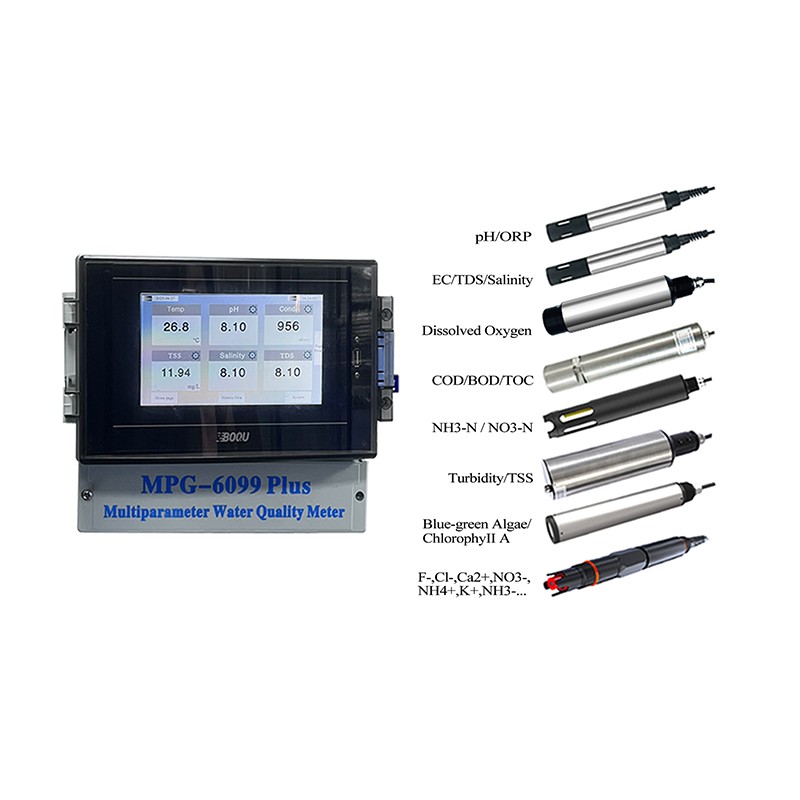
MPG-6099Plus Multi-Parameter Water Station
Turnkey wall-mount station integrating pH, EC, Turbidity, DO, and Residual Chlorine for drinking networks.
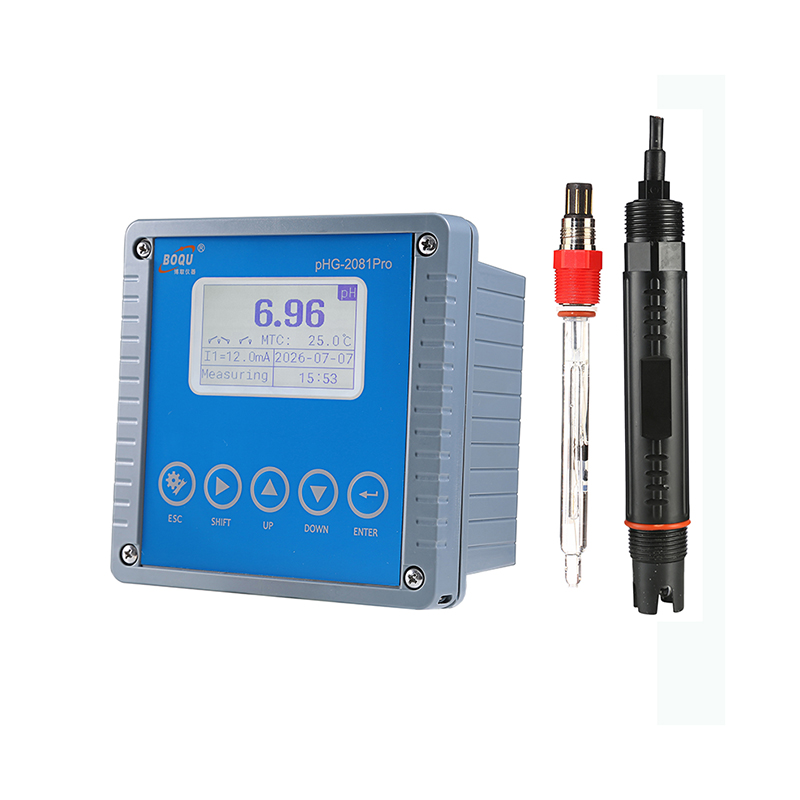
pHG-2081Pro Industrial Online Process Transmitter
Rugged IP65 field-mount transmitter equipped with dual isolated 4-20mA telemetry and dual alarm relays.
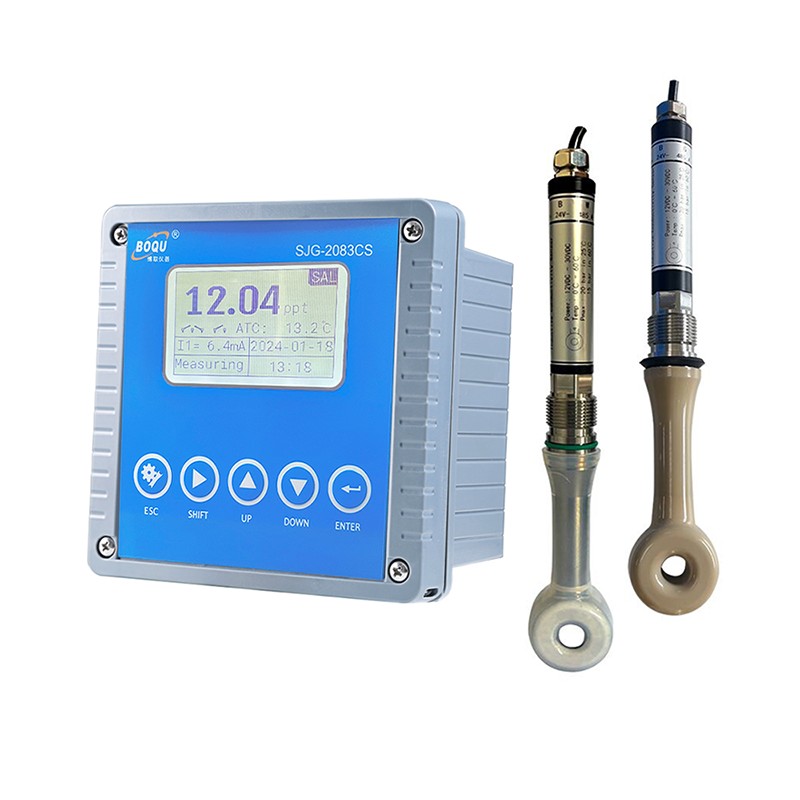
SJG-2083CS Online Acid & Alkali Concentration Meter
Toroidal electrodeless conductivity analyzer providing real-time percentage concentration for CIP chemistry.
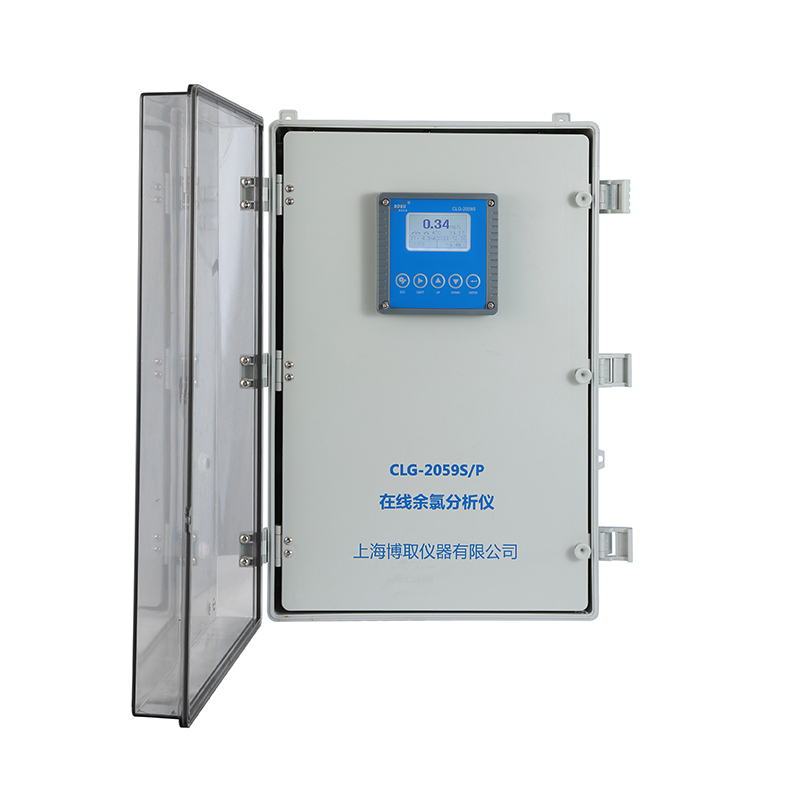
Online Constant-Voltage Residual Chlorine Monitor
Reagentless amperometric free chlorine telemetry with automated pH compensation for municipal piping.
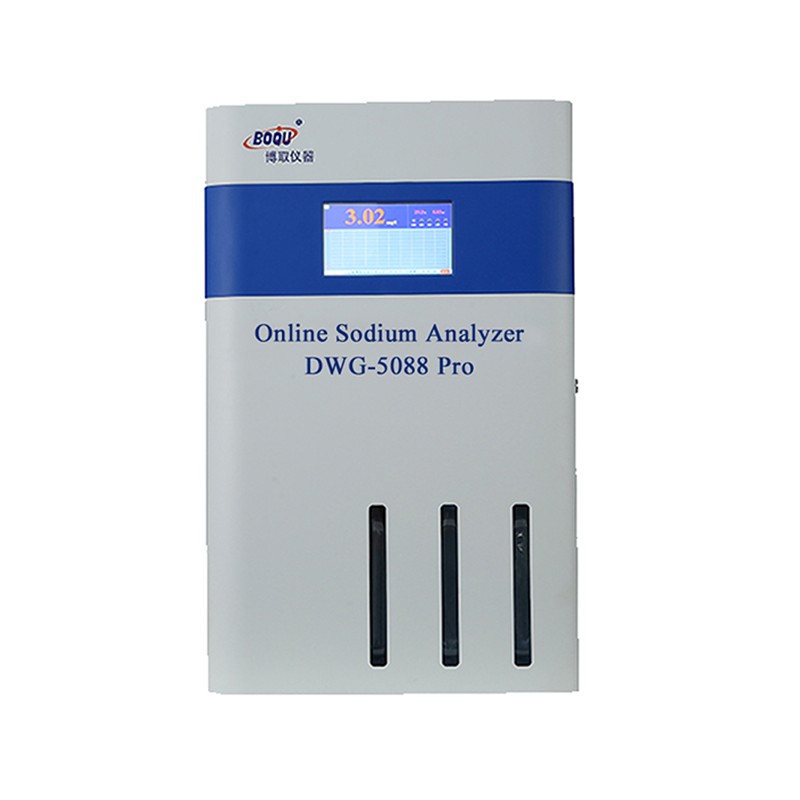
Online Silicate, Phosphate & Sodium SWAS Analyzer
Sub-ppb trace chemical monitoring protecting superheater tubes and high-pressure steam turbines from scaling.
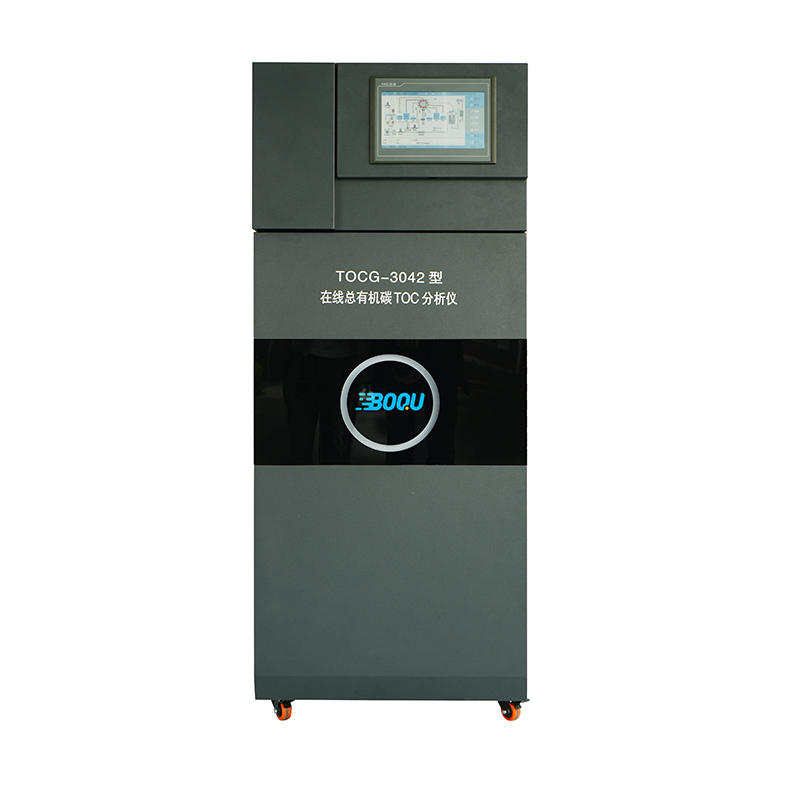
TOC-3042 High-Precision Total Organic Carbon Analyzer
UV-persulfate catalytic oxidation measuring trace organic carbon in pharmaceutical WFI and UPW loops.
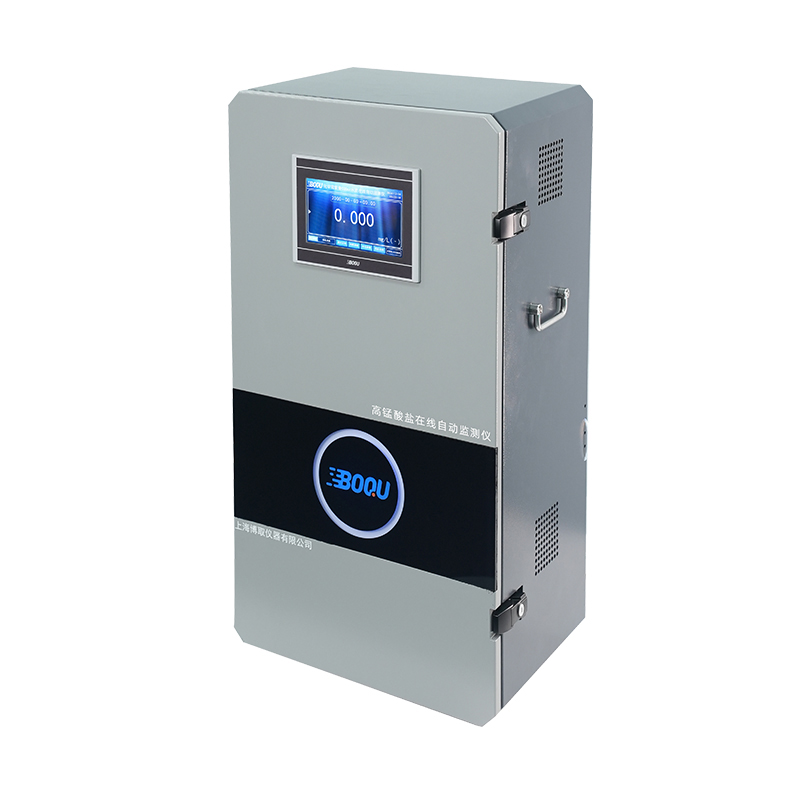
Online COD / TP / TN / NH3-N Discharge Analyzer
Automated wet-chemical digestion analyzers providing continuous environmental regulatory compliance reporting.