
Featured Industrial TDS & Water Quality Sensors (Top Series)
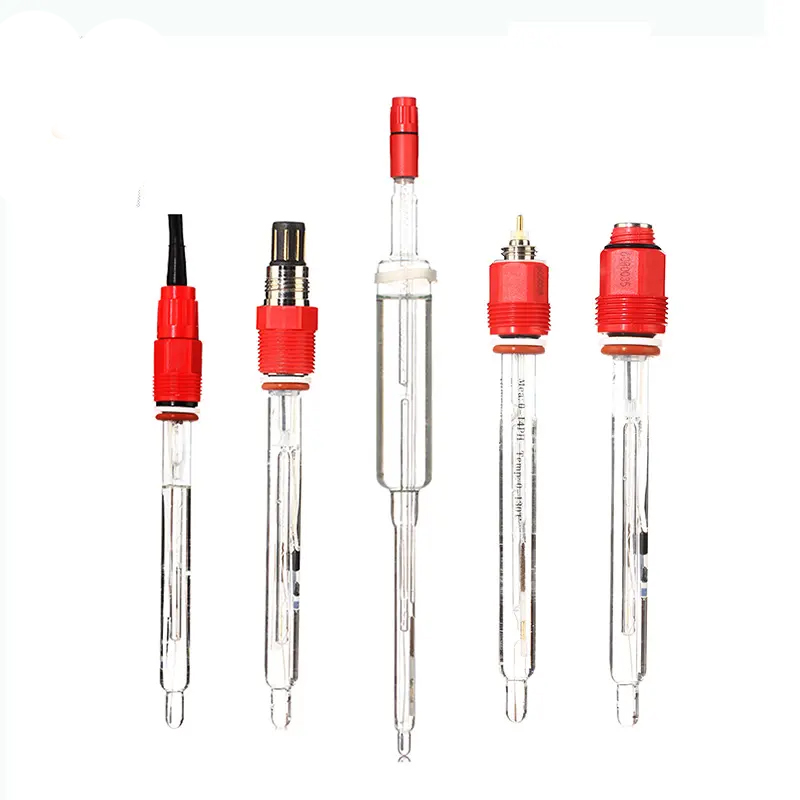
Explore BOQU Instrument's premier line of conductivity, TDS, pH, and dissolved oxygen sensors engineered under ISO 9001 standards for maximum reliability.




1. Executive Overview & Technical Physics of TDS Electrode Engineering
Total Dissolved Solids (TDS) measurement represents one of the most critical analytical parameters in modern water treatment, chemical processing, power generation, and environmental monitoring. Defined as the aggregate mass of mobile charged ions—including minerals, salts, cations, and anions—dissolved in a given volume of water, TDS is expressed in milligrams per liter (mg/L) or parts per million (ppm). As global industrial standards stringent, procurement directors and engineering leads require a deeper technical understanding of how conductivity-based TDS electrodes function, their electrical constant physical geometry ($K$), and the supply chain advantages offered by China's advanced instrumentation hubs like Shanghai BOQU Instrument Co., Ltd.
In online liquid analysis, direct gravimetric measurement of TDS through evaporation and weighing is impractically slow for automated closed-loop control. Consequently, real-time industrial process control relies on electrochemical TDS electrodes. These sensors measure the ac electrical conductivity (EC) between sensing elements and instantly apply a calibrated temperature compensation algorithm ($2.18\%/^\circ\text{C}$ non-linear or linear Nernstian curves) to calculate normalized TDS at $25^\circ\text{C}$.
Cell Constant ($K$) Engineering & Physical Selection
Selecting the appropriate cell constant ($K = d / A$, where $d$ is electrode gap distance and $A$ is active surface area) is paramount for achieving accurate, drift-free TDS telemetry across diverse water matrices:
| Cell Constant ($K$) | Conductivity / TDS Range | Electrode Material | Primary Application Matrix |
|---|---|---|---|
| $K = 0.01 \text{ cm}^{-1}$ | 0.05 – 20 µS/cm (0.02 – 10 ppm TDS) | 316L Stainless Steel / Titanium | Semiconductor Ultrapure Water (UPW), Boiler Feedwater, SWAS Cation Exchange |
| $K = 0.1 \text{ cm}^{-1}$ | 0.5 – 200 µS/cm (0.25 – 100 ppm TDS) | Titanium / Bright Platinum | RO Permeate, Condensate Polishing, Pharmaceutical WFI Loops |
| $K = 1.0 \text{ cm}^{-1}$ | 10 – 20,000 µS/cm (5 – 10,000 ppm TDS) | Platinum Black / High-Density Graphite | Potable Water, Cooling Towers, Hydroponics, General Industrial Wastewater |
| $K = 10.0 \text{ cm}^{-1}$ | 200 – 200,000 µS/cm (100 – 130,000 ppm) | Platinum / Toroidal Inductive Polymer | Desalination Brine, Zero Liquid Discharge (ZLD), Chemical Concentrates |
2. China's Supply Chain Efficiency & Manufacturing Advantages
Over the past two decades, China has transformed from a low-cost assembly hub into the world's epicenter for electro-analytical instrument manufacturing. Sourcing TDS electrodes and online transmitters directly from top-tier Chinese manufacturers like Shanghai BOQU Instrument provides global B2B buyers with decisive structural advantages:
End-to-End Vertical Integration
From glassblowing and platinum electrode sintering to CNC body machining, surface passivation, and SMT circuit board assembly, our 4,632 m² Kangqiao and Lingang facilities control 100% of the manufacturing value chain.
High-Temp & Harsh Chemical Labs
BOQU operates China's leading specialized high-temperature water quality sensor laboratory, performing 48-hour continuous burn-in, pressure-chamber cyclic testing, and NIST-traceable calibration before dispatch.
Agile OEM / ODM Customization
Engineers can specify customized thread types (NPT 3/4", PG13.5, Tri-Clamp), cable lengths, digital protocol firmwares (Modbus RTU, HART, Profibus), and private labeling with rapid prototyping in 7 to 10 days.
3. Localized Industrial Application Matrix & Deployment Engineering
Industrial applications demand specialized sensor geometries, housing metallurgy, and cable shielding to withstand thermal stress, electrical noise (VFD drive harmonics), and organic or inorganic fouling. Below is an engineering overview of key operational deployments:
A. Steam and Water Analysis Systems (SWAS) in Power Plants
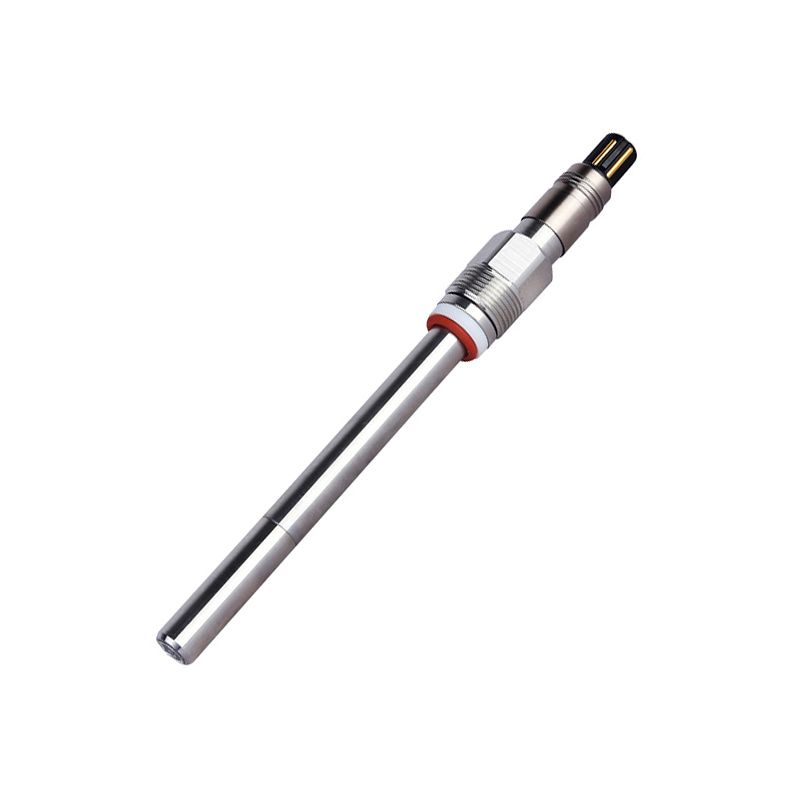
In thermal and nuclear power plants, boiler feed water purity is critical to prevent turbine blade scaling and boiler tube corrosion. High-precision $K=0.01 \text{ cm}^{-1}$ 316L stainless steel or titanium TDS electrodes are installed in continuous cation exchange sample lines. By monitoring cation conductivity and calculated low-ppm TDS, station chemists catch micro-leaks in steam condensers immediately.
B. Semiconductor & Electronics Ultrapure Water (UPW) Loops
Microchip fabrication requires ultra-high purity water with resistivity approaching the theoretical limit of 18.2 MΩ·cm ($0.055 \mu\text{S/cm}$ or $< 0.02 \text{ ppm TDS}$). Dual-electrode sensors featuring electropolished titanium pins and specialized temperature sensors (Pt1000) compensate for pure water's steep temperature coefficient, guaranteeing stable baseline readings.
C. Zero Liquid Discharge (ZLD) & Textile Effluent Treatment
High-salinity textile dyeing wastewater and ZLD evaporator crystallizers plug traditional contact conductivity sensors due to heavy salt polarization and mineral scaling. Here, non-contact Toroidal Inductive TDS Electrodes (encapsulated in PEEK or PFA) are deployed. Using alternating magnetic fields induced across dual toroidal coils, these sensors measure extreme TDS levels (up to 130,000 ppm) with zero electrode surface fouling.
4. Global Sourcing Criteria & Procurement Framework
When evaluating China TDS electrode wholesalers and suppliers for enterprise procurement, EPC contracts, or OEM distribution, procurement teams should utilize the following 5-point quality verification checklist:
- Material Certification Traceability: Demand Mill Test Certificates (MTC) for 316L stainless steel, Titanium Grade 2, or Hastelloy wetted parts, as well as FDA compliance for seals used in food and pharmaceutical processes.
- Temperature Compensation Integrity: Ensure probes integrate genuine Pt100/Pt1000 Class A RTD elements rather than inaccurate NTC thermistors.
- Electrode Passivation & Surface Treatment: Verify that platinum or graphite contacts undergo electrolytic passivation to prevent measurement drift caused by double-layer capacitance polarization.
- IP68 Submersible Enclosure Ingress Protection: Verify integral molded cable glands with fluororubber O-rings to survive total submersion in aerated or acidic basins.
- Factory Aging & Calibration Standards: Require certificate of calibration against ASTM D1125 / ISO 7888 standard conductivity solutions ($1413 \mu\text{S/cm}$, $12.88 \text{ mS/cm}$, or $111.8 \text{ mS/cm}$).
5. Next-Generation Trends: IoT Integration & AI Maintenance
The global liquid analytical market is shifting rapidly toward smart, decentralized sensor architectures. BOQU Instrument leads this transition with three core technology innovations:
IoT RS485 Modbus Native Integration
Smart sensors store calibration constants directly on internal microchips. They output digital RS485 Modbus signals directly to PLCs, SCADA systems, or cloud gateways up to 1,200 meters away without signal degradation.
Fluoropolymer Anti-Fouling Nano-Coatings
Hydrophobic surface modifications applied to body shells reduce biological film buildup and mineral scale accumulation by over 60%, significantly extending cleaning intervals.
Predictive Health Diagnostics (Electrode Health Index)
Algorithms monitor electrode polarization impedance and response time dynamics in real-time, notifying operators when cleaning or re-calibration is needed before field failure occurs.
Complete Online Analyzers & Multi-Parameter Monitoring Systems
Complete your online telemetry loop with BOQU's industrial transmitters, dual-channel controllers, and specialized wet chemistry analyzers.








Frequently Asked Questions (FAQ) & Knowledge Base
Comprehensive answers regarding TDS technical specifications, factory lead times, OEM/ODM processes, and calibration guidelines.