
A Ph Meter High Temperature is designed to measure pH in hot process samples, where ordinary electrodes may drift, respond slowly, or suffer damage. It is not simply a standard meter with a larger temperature limit. Its probe materials, reference junction, cable, and temperature sensor must all suit the operating conditions. Heat changes everything.
A practical paraphrase of principles in analytical chemist Gary D. Christian’s work is: “Reliable pH results depend on controlling the measurement conditions, not just reading the display.” This is a paraphrase, not a verbatim quotation. That distinction matters. Temperature compensation adjusts the electrode’s response; it does not automatically correct every change in the sample’s chemistry. A hot liquid can have a different pH from the same liquid after cooling. The reading needs context.
This introduction explores how high-temperature pH meters work, which specifications deserve attention, and how to use them more reliably. For example, a probe rating must match the sample’s actual temperature, not merely the vessel’s nominal setting. Calibration, cleaning, and installation also affect results. Small errors can hide in a stable-looking number. Not quite obvious. Even experienced operators should check whether a measurement represents the process temperature or a cooled sample. That choice can change the interpretation.
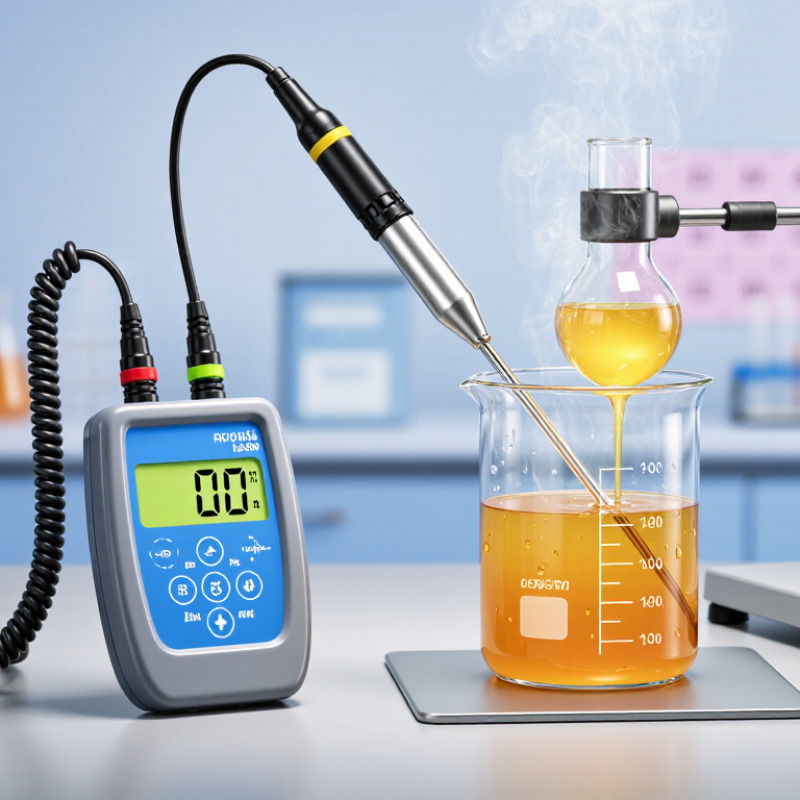
A high-temperature pH meter is a measurement system designed to monitor samples that would exceed the operating limits of ordinary pH equipment. It typically combines a temperature-rated electrode, a compatible cable, and a meter that can handle the signal. The electrode’s glass membrane, reference junction, and seals must tolerate the process conditions. Heat alone is not the whole story.
There is no single temperature that defines every high-temperature meter. The usable process range depends on the sensor design and the fluid’s pressure, chemistry, and exposure time. A probe might tolerate a brief hot cleaning cycle but require a lower limit during continuous measurement. Check the specified operating range, not just the maximum temperature. Also consider thermal cycling: moving a cold probe into a hot vessel can stress its glass and seals.
Temperature compensation corrects how the electrode responds to temperature; it does not automatically correct the sample’s changing pH. That distinction is easy to miss. For example, a reading from a heated tank may differ from a cooled sample because the liquid’s chemistry changes with temperature. In practice, record the measurement temperature and follow the sensor’s calibration guidance. A rated limit is useful, but it does not replace checking real process conditions.
A high-temperature pH meter pairs an electronic meter with an electrode designed for hot, often pressurized samples. The electrode’s glass membrane, reference system, and housing must tolerate heat without losing a stable signal. At 130°C, the sample may also require a closed, pressure-rated measurement point. A hot probe in an open beaker is not a reliable shortcut.
Temperature changes both electrode response and the sample’s chemistry. The IAPWS technical release on water’s ionization constant shows that neutral water has a pH near 6.14 at 100°C, rather than 7.00 at 25°C. Automatic temperature compensation adjusts the electrode’s response; it does not convert the sample’s pH to its value at another temperature. That distinction is easy to miss. ASTM D1293, the standard test method for pH in water, also emphasizes controlled measurement practices, including calibration and temperature considerations.
In practice, readings can get messy. Hot liquids can accelerate drift, while deposits at the reference junction may slow response. Check the electrode’s stated temperature and pressure limits, calibrate with suitable buffers, and allow the reading to stabilize. Record the sample temperature alongside pH. A brief temperature spike can matter.
What Is a High Temperature pH Meter?
How the Nernst Slope Changes from 59.16 mV/pH at 25°C
A high-temperature pH meter measures acidity in samples warmer than ordinary room conditions. Its electrode converts hydrogen-ion activity into an electrical signal. That signal changes with temperature. At 25°C, the theoretical Nernst slope is about 59.16 mV per pH unit. At 50°C, it rises to roughly 64.12 mV per pH unit. The relationship is direct: higher temperature produces a steeper slope.
This matters during calibration and measurement. A meter calibrated at 25°C may misread a hot sample if its temperature response is not handled correctly. Many instruments compensate for the electrode’s changing slope when a temperature sensor is connected. But compensation does not automatically correct the sample’s own pH shift as its temperature changes. Small shifts matter. Check buffer temperature tables and calibrate near the actual measurement temperature when practical.
For example, a probe in a heated process tank may face hot liquid, steam, and changing flow. The electrode and its reference junction must be rated for those conditions. Wait for the reading to stabilize, and record the sample temperature alongside pH. In practice, this step is easy to overlook. A displayed value can look precise while still reflecting a temperature mismatch or a changing sample.
What Is a High Temperature pH Meter?
How Temperature Compensation Separates Electrode Response from Sample pH
A high temperature pH meter measures samples that are too warm for ordinary electrodes. Its temperature sensor helps adjust the electrode’s electrical response. This matters because the electrode’s slope changes with temperature. Under the Nernst equation, the theoretical slope is about 59.16 mV per pH unit at 25°C, rising to about 64.12 mV at 50°C. That is a measurable shift.
But compensation has a boundary. It corrects how the electrode converts voltage into pH; it does not convert a warm sample’s pH into its value at 25°C. Sample chemistry can change with temperature, and the direction and size depend on the solution. The USGS National Field Manual, Chapter A6.4, treats temperature as an important part of pH measurement practice. In the lab, record the sample temperature and calibrate with buffers near the measurement temperature when practical. A hot beaker can still lose heat while you work. Small details matter.
Look for an electrode rated for the sample’s actual temperature, not only a meter with automatic temperature compensation. Check its temperature limit, junction design, and response stability. Even careful calibration cannot erase uncertainty in a changing sample. That deserves a second look.
How Temperature Compensation Separates Electrode Response from Sample pH
The theoretical Nernst slope of a pH electrode increases with temperature, from about 54.2 mV per pH unit at 0°C to 74.0 mV per pH unit at 100°C. Temperature compensation adjusts for this change in electrode response. It does not correct for temperature-driven changes in the sample’s actual pH.
A high-temperature pH meter pairs a meter with an electrode rated for hot samples. Selection starts with the process temperature, not just the display range. Check the probe’s continuous and short-term temperature limits, wetted materials, cable rating, and chemical compatibility. A probe that survives a brief hot rinse may not suit continuous immersion. Small details matter.
Consider how the sample will be measured. Direct readings can change as the sample cools, while temperature compensation adjusts electrode response but does not correct every temperature-driven change in the sample’s chemistry. For repeatable results, measure at a controlled temperature or record the temperature with each reading. Use calibration buffers appropriate to that temperature, and allow the probe to stabilize. Hot samples can drift. That is normal, but unexplained drift deserves attention.
Maintenance is practical, not complicated. Rinse the electrode after use, remove deposits with a suitable cleaning solution, and store it in the recommended storage solution, never dry. Check the junction for clogging and inspect the glass for cracks before each shift. Verify performance with fresh buffers at regular intervals. If readings remain slow or disagree, recalibrate and compare with a second method before replacing the probe; the process itself may have changed.
| Measurement Factor | What to Check | Practical Guidance |
|---|---|---|
| What “high temperature” means | The meter and the electrode have separate temperature limits. | A high-temperature pH system pairs a meter with a probe rated for the process conditions. Check the probe’s specified continuous and short-term temperature limits; there is no single temperature range that applies to every system. |
| Process temperature | Maximum and typical sample temperature, including cleaning or sterilization cycles. | Choose a probe whose published temperature rating covers the actual process. High temperatures can shorten electrode life, and rapid temperature changes can stress the glass membrane. |
| Temperature compensation | Whether the system measures temperature and applies electrode compensation. | Automatic temperature compensation adjusts the electrode’s temperature-dependent response. It does not convert a hot sample’s pH into the pH the sample would have at 25°C; sample chemistry itself can change with temperature. |
| Electrode construction | Glass type, body material, seal design, and chemical compatibility. | Match wetted materials to the sample and cleaning agents. Confirm the manufacturer’s temperature, pressure, and chemical-resistance specifications for the complete probe assembly. |
| Reference junction | Junction design and resistance to clogging or contamination. | For viscous, dirty, or solids-containing samples, select a junction suited to those conditions. A blocked or contaminated junction can cause slow response, unstable readings, or calibration errors. |
| Pressure and installation | Process pressure, immersion depth, flow, and mounting arrangement. | For pressurized or in-line service, verify the probe and fitting pressure ratings at the operating temperature. Install the sensing tip as directed and avoid placing it where air pockets or deposits can interfere with contact. |
| Calibration | Buffer values, buffer temperature, and calibration frequency. | Use fresh, traceable buffers that bracket the expected process pH. Buffer pH values vary with temperature, so use the temperature table or compensation method specified for the buffers. Rinse the probe between solutions and avoid returning used buffer to its bottle. |
| Measurement procedure | Stabilization time and temperature equilibration. | Allow the reading to stabilize according to the probe’s response characteristics. Record process temperature with pH, and use a consistent sampling and measurement procedure when comparing results. |
| Cleaning and inspection | Membrane condition, deposits, junction fouling, and cable or connector damage. | Clean the probe using a method compatible with its materials and the type of deposit. Do not scrape the glass membrane. Inspect regularly for cracks, dried residues, loose connections, or a junction that remains clogged after cleaning. |
| Storage and replacement | Storage solution and signs of declining performance. | Store the electrode in the solution specified for that probe; do not let the sensing bulb dry out. Replace the electrode when it cannot calibrate reliably, responds persistently slowly, or shows physical damage. |
Selection principle: Confirm the complete measurement system’s temperature, pressure, chemical-compatibility, and installation limits from its technical documentation before use.
Its electrode must be rated for the sample’s actual temperature and pressure. Check housing, cable, and wetted-material limits. A hot probe in an open beaker is not a safe shortcut.
No. It adjusts the electrode’s electrical response, not the sample’s chemistry. Record the sample temperature with each reading. Easy to confuse.
Water’s chemistry changes with temperature, so neutral pH is not always 7.00. The reading describes the sample at its measurement temperature.
Use fresh, suitable buffers and calibrate near the measurement temperature when practical. Allow the reading to stabilize. A warm beaker can cool while you work.
Heat may accelerate drift, and deposits can clog the reference junction. Check for buildup and inspect the glass for cracks. Drift is not always a probe fault.
Rinse it after use, clean deposits with a suitable solution, and store it in recommended storage solution. Never store it dry.
Recalibrate with fresh buffers and compare against a second method. Check whether the process changed before replacing the electrode. That possibility is easy to miss.
A high-temperature pH meter is designed to measure acidity or alkalinity in hot process conditions, where ordinary sensors may respond slowly or deteriorate. A Ph Meter High Temperature system combines a meter with an electrode suited to the process range, potentially reaching temperatures up to 130°C when the sensor is specifically rated for that service. Its materials, junction design, and temperature limits should match the sample and operating conditions.
As temperature rises, the electrode’s Nernst slope changes from its reference value of 59.16 mV per pH unit at 25°C. Temperature compensation accounts for this change in electrode response, but it does not automatically correct for the way the sample’s actual pH may vary with temperature. Choosing a meter therefore requires considering process temperature, pressure, chemical compatibility, and measurement needs. Regular cleaning, inspection, calibration, and careful handling help maintain reliable readings and extend electrode life.
